
Table of Content
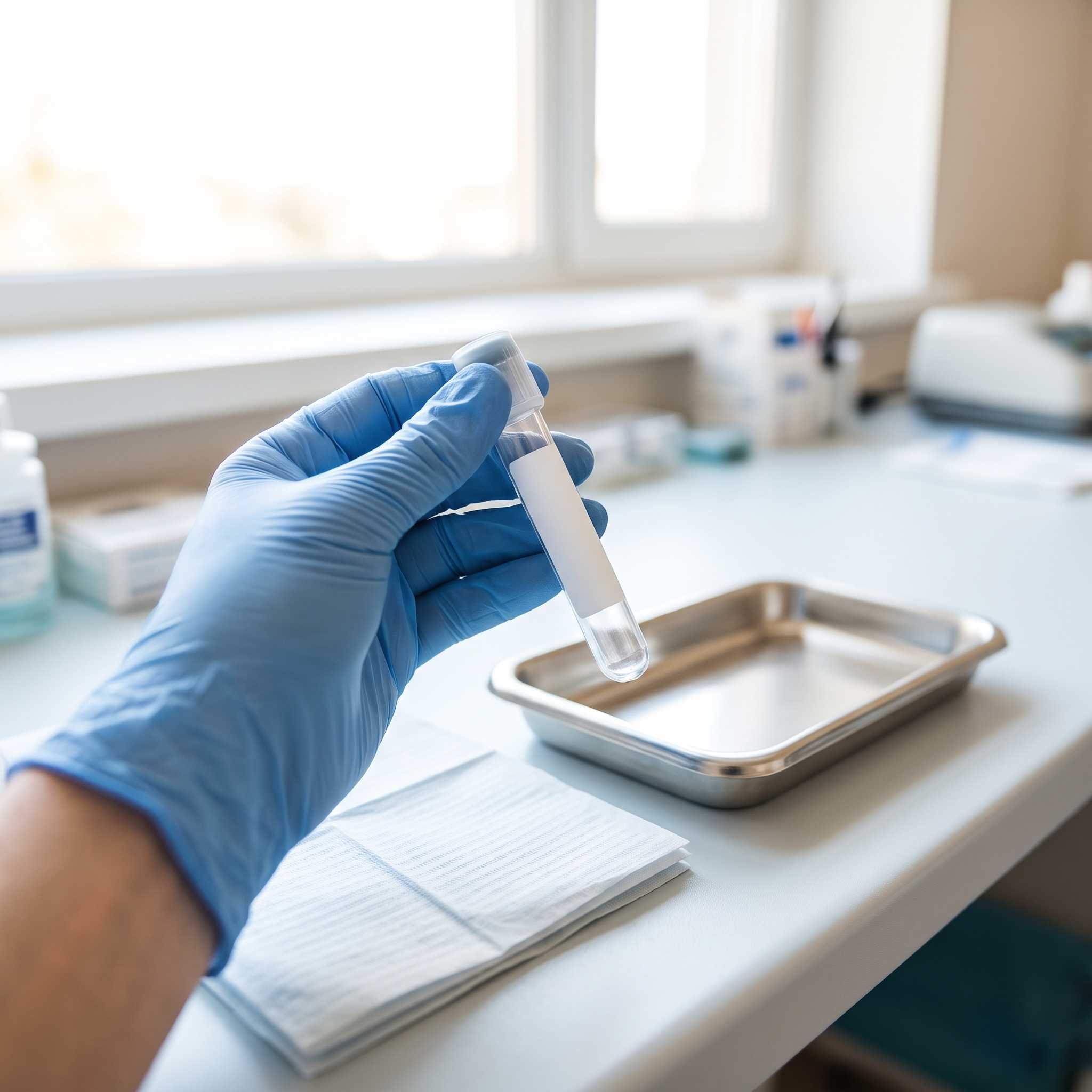
Extrapulmonary tuberculosis is TB anywhere other than the lungs. A screening test shows whether TB germs are in the body, never where they are sitting.
About 16 percent of reported TB cases worldwide are extrapulmonary, according to a 2026 review in Pathogens. Those cases are hard to pin down because the samples hold very few bacteria, the sites are scattered through the body, and the symptoms point nowhere in particular. A clean skin test does not close the question.
Why Does a Negative TB Test Not Settle It?
Because a negative result lowers the odds without ending the inquiry. The CDC (2024) says a negative result means inactive TB or active TB disease is unlikely, and that a provider may still run more tests.
The combination that keeps the file open is spelled out on that same page: a negative blood or skin test together with symptoms of active TB disease leads to further testing, which may include a chest x-ray and a test of coughed-up phlegm. Symptoms outrank the screening result, not the other way round.
Reading a skin test is also a measurement rather than a yes or a no, and the number can shift with who reads it and when. Reading a tuberculin skin test in millimeters covers how that measurement is taken and what moves the cutoff.
Can a Swollen Lymph Node Be TB?
Yes. The CDC (2024) says symptoms of active TB disease depend on where the germs are growing, and that TB disease of the lymph nodes may cause a firm red or purple swelling under the skin.
The rest of that list goes nowhere near a chest clinic either. Blood in the urine points to TB of the kidney, headache or confusion to TB of the brain, back pain to TB of the spine, and hoarseness to TB of the larynx. Each of those complaints lands with a different specialist, which is how months get added before anyone orders a TB-specific test.
A node that stays up for weeks usually has a more ordinary explanation, and the point here is not to assume tuberculosis. The point is that a clean screening test has not excluded it, and that matters more when there is a history of exposure or of living somewhere TB is common.
Where TB Can Show Up, and How It Presents
The table below sets out the CDC's site-by-site list, including the case where there is nothing to see at all. Treat it as a map of what to mention to a doctor rather than a self-diagnosis tool, because every row on it has commoner causes than TB.
| Where the TB germs are growing | What it can look like |
|---|---|
| Lungs | A bad cough lasting three weeks or longer, chest pain, coughing up blood or phlegm |
| Lymph nodes | A firm red or purple swelling under the skin |
| Kidney | Blood in the urine |
| Brain | Headache or confusion |
| Spine | Back pain |
| Larynx | Hoarseness |
| Anywhere, with no symptoms at all | Inactive TB: no symptoms, not contagious, but able to become active later without treatment |
Who Is Actually at Higher Risk?
The CDC (2024) splits the question in two: a higher chance of being exposed to TB germs, and a higher chance of an existing infection turning into active disease.
Conditions That Let an Infection Turn Into Disease
On that second list the CDC names HIV infection, diabetes, severe kidney disease, organ transplants, head and neck cancer, silicosis, low body weight, injection drug use, specialized treatment for rheumatoid arthritis or Crohn's disease, and medical treatments that weaken the immune system. Children under five are also at higher risk once infected.
Places That Raise the Chance of Exposure
This is where the topic meets assisted living head on. The CDC lists being born in or frequently traveling to countries where TB is common, having lived in large group settings such as homeless shelters, prisons or jails, and working in hospitals, homeless shelters, correctional facilities and nursing homes.
That is why facility paperwork asks about TB at all. The question is not a judgment about one applicant. It is a congregate-living rule, written because a shared dining room holds people whose immune systems are in very different shape from one another.
What a BCG Vaccination Changes
BCG is not generally used in the United States, and the CDC notes it is often given to infants and small children in countries where TB is common. It can produce a false positive skin test reaction, which is why blood tests are the preferred option for anyone who has had it, and why the IGRA blood test after a positive skin test is so often the next move in facility paperwork.
How Does the California Picture Look Right Now?
It is moving in the wrong direction, which is part of why screening has tightened. In a February 2024 health advisory, the California Department of Public Health reported that TB cases in the state rose 15 percent in a single year, from 1,842 in 2022 to 2,113 in 2023, and that cases had increased every year since 2020 for a total rise of 24 percent.
The same advisory records the weight of those cases. About half of people with TB in California are hospitalized, and TB causes more than 200 deaths a year in the state. CDPH asked providers to keep TB in the differential for patients with a risk factor or with symptoms lasting longer than two weeks.
Reporting is not discretionary. CDPH states that providers are required to report suspected and confirmed TB cases to their local public health department, and that local TB programs can be consulted on diagnosis, treatment and prevention. For a facility, that means a suspected case has a named route out of the building and into public health hands.
Is Extrapulmonary TB Contagious?
The spread comes from the lungs and the throat, not from the other sites. The CDC (2024) says TB germs get into the air when a person with active TB disease of the lungs or throat coughs, speaks or sings, and that people nearby may breathe them in.
So TB in a lymph node, a kidney or a patch of skin is not the form that puts a household at risk through ordinary contact. Where lung disease is involved, the germs can stay in the air for several hours depending on the setting, and they spread more readily indoors or anywhere with poor air circulation, such as a closed vehicle.
Two cautions sit beside that. Lung involvement and disease elsewhere can exist in the same person, which is why a chest evaluation happens regardless of where the lump is. And the CDC notes that people with inactive TB feel well, have no symptoms and cannot pass TB germs to anyone, yet can develop active disease at any time if the infection is left untreated.
How Is TB Outside the Lungs Actually Found?
By taking a sample from the place that is affected. Running the screening test a third time adds nothing, because it was never measuring location.
Why Culture on Its Own Is Slow
The 2026 Pathogens review puts numbers on the wait. Growing the bacteria in culture takes two to eight weeks, and in these samples it finds the organism roughly 30 to 70 percent of the time depending on the site. The review describes the lesions as paucibacillary, which simply means there are few bacteria in them for any test to find.
What a Rapid Molecular Test Adds
Running a molecular test on the sample itself is far quicker and, for this kind of tissue, reasonably reliable. The same review reports pooled sensitivity of roughly 85 to 90 percent for a lymph node aspirate or a tissue sample, with a result in about two hours, and notes that lymph node TB carries a higher bacterial load than spinal or pleural fluid. A node is, comparatively, a good place to take a sample from.
Reaching the tissue is the harder half. The review points out that the sites most often involved, including the spine, the lining of the brain, the pleural space and the deep lymph node chains, are the least suited to simple sampling. That is the real reason these diagnoses take time, rather than any shortage of good tests.
The Dermatology Route for a Stubborn Skin Lesion
A skin lesion that will not resolve belongs with a dermatologist, who is the person who takes the sample rather than the one who orders another screening test. Jonathan Carp, MD is a board-certified clinical dermatologist whose work covers minor skin surgery and skin findings tied to internal disease, which is exactly the overlap a suspected skin TB case sits in.
Getting the Blood Draw Done at All
Where the next step is a blood test rather than a biopsy, the obstacle is usually transport rather than the test. Onsite Phlebotomy Solutions collects specimens at home, in an office or inside a senior community rather than requiring a trip to a laboratory, which removes the most common reason these orders sit undone.
Why Would the Swelling Stay After Treatment Starts?
Because the course is measured in months, not weeks. The CDC (2024) says treatment for active TB disease can take four, six or nine months depending on the plan, and treatment for inactive TB three, four, six or nine months.
A node that is still firm at week six therefore says very little about whether the treatment is working. The tissue reaction that produced the swelling outlasts the bacteria that triggered it, and the planned endpoint was never six weeks away in the first place.
None of that means a stalled recovery should be accepted without questions. The useful questions are narrow: which organism was confirmed, which samples were taken and when, whether drug resistance testing was done, and what timeline the treating team expects for the swelling itself.
Where This Fits in the LIC 602A Process
The form asks a narrow question. It asks whether the person is free of active, communicable tuberculosis, not whether they were ever infected with TB germs at any point in their life.
That distinction is why a positive screening result is not an automatic refusal. What a facility needs is documentation that active disease has been ruled out, and what a TB clearance for assisted living involves sets out what that documentation normally contains. The sequence after a reactive screen is well mapped, and the steps that follow a positive TB skin test starts with confirming the result rather than with sampling tissue.
The examination behind the form has to be done and signed by a licensed physician, which is the usual bottleneck for a family whose relative cannot easily get to an office. Where travel is the hard part, a physician can come to the home, examine the person and complete the LIC 602A there. The trade-offs between the two routes are laid out in mobile physician versus clinic.
If a Lump Appears After Move-In
Then the paperwork question changes from admission to update. A new finding in a resident who is already living in the facility is a change of condition, and when a change in condition means updating the LIC 602A covers how that is documented.
The clinical order of business does not change. The node gets examined, the site gets sampled if there is a reason to, and public health gets told if TB is suspected. A resident who cannot easily travel can be seen where they are, since a doctor can carry out the visit at home or inside the facility.
FAQ
Which lymph nodes are usually involved?
The ones that are hardest to reach are the problem. The 2026 Pathogens review notes that deep lymph node chains are among the sites least suited to simple sampling, alongside the spine, the lining of the brain and the pleural space. A node close to the surface is far easier to sample than one sitting deep in the chest or abdomen.
How do people get TB outside the lungs in the first place?
Through the lungs. The CDC explains that when a person breathes in TB germs, the germs can settle in the lungs and begin to grow, and from there they can travel through the blood to other parts of the body such as the kidney, spine and brain. The entry point is the same; only the destination differs.
Does a vaccination history change which test should be used?
Yes. The CDC says the BCG vaccine, which is not generally used in the United States but is common for infants in countries where TB is widespread, can cause a false positive skin test reaction. TB blood tests are the preferred option for anyone who has received it.
Is extrapulmonary TB more common in some groups?
The 2026 Pathogens review reports that it disproportionately affects children and people whose immune systems are suppressed, and that the extrapulmonary share of reported cases exceeds 20 percent in several high-burden countries, including India, Bangladesh and Ethiopia.
Can a negative sputum smear rule out TB outside the lungs?
No. The Pathogens review states plainly that a negative smear never excludes extrapulmonary TB. Microscopy still has a role for lymph node aspirates and abscess material in high-burden settings, but it is a test that can only confirm, not exclude.
How long can treatment take if the TB is drug resistant?
Longer, and the CDC says so without softening it: treatment may take a long time, sometimes months or years, and the medicines can cause side effects. That is one reason the laboratory work includes testing for drug resistance rather than stopping at a positive result.
Sources Used
Diagnosis of Extrapulmonary Tuberculosis at the Interface of Pathogen Detection and Host Response: Molecular, Microbiological, and Histopathological Advances – Pathogens (2026)
Signs and Symptoms of Tuberculosis – Centers for Disease Control and Prevention (2024)
Substantial Increase in Tuberculosis in California: Recommendations for California Healthcare Providers – California Department of Public Health (2024)
Testing for Tuberculosis – Centers for Disease Control and Prevention (2024)
Treating Tuberculosis – Centers for Disease Control and Prevention (2024)
Tuberculosis: Causes and How It Spreads – Centers for Disease Control and Prevention (2024)
Tuberculosis Risk Factors – Centers for Disease Control and Prevention (2024)