
Table of Content
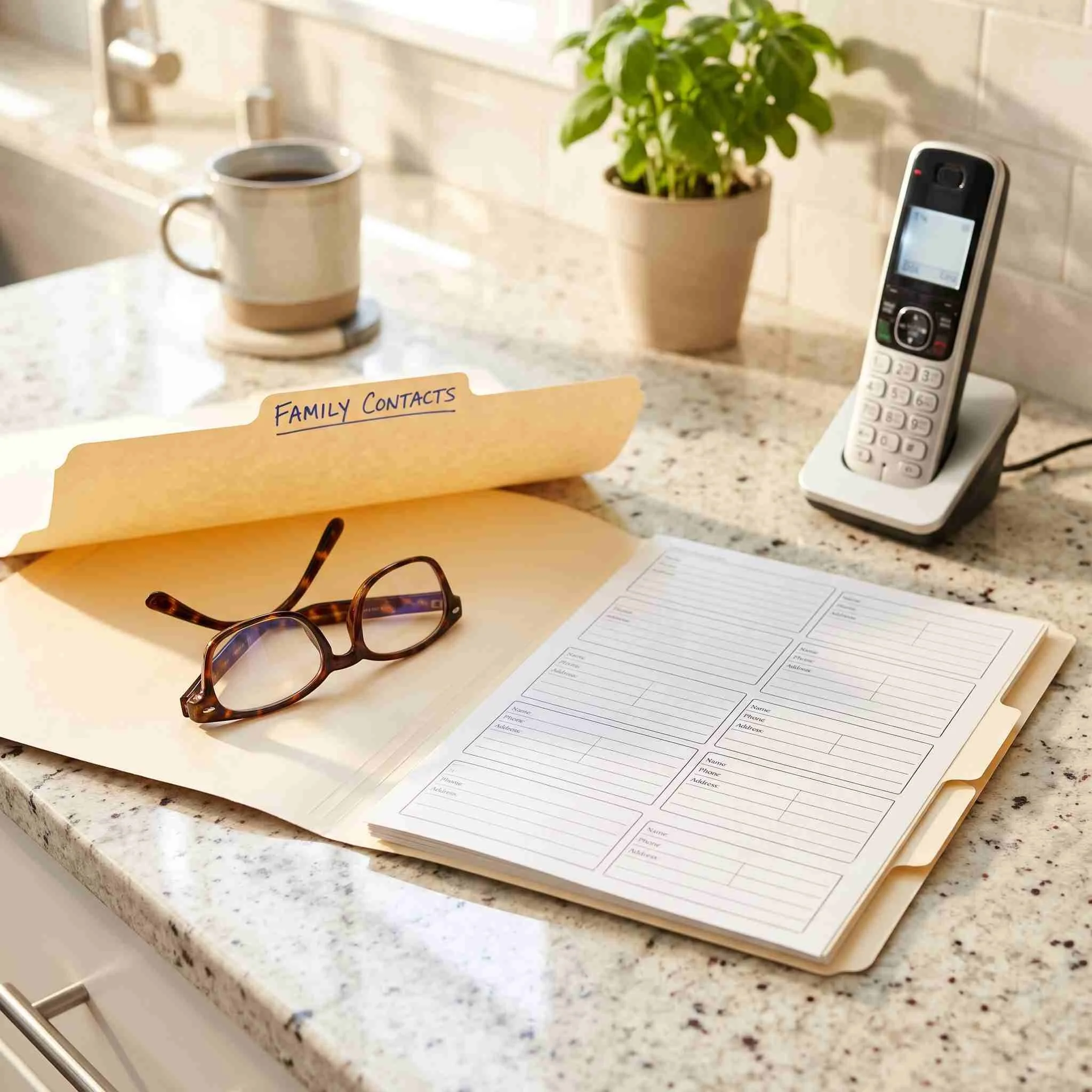
LIC 601 is the Identification and Emergency Information form. Every California community care facility keeps one for each resident, and it is the first page staff reach for in a crisis.
It is a contact sheet with legal weight. The form itself states that the information is required under the Health and Safety Code and department regulations and must be kept for every person admitted to a community care facility, and the current version is stamped LIC 601 (8/08). Nobody reads it at the move-in. Everybody reads it at 2 a.m.
What Is the LIC 601 Form?
A record of who the resident is and who to call. It is published by the California Department of Social Services and completed at admission, then filed in the resident record where staff can find it without hunting.
One form covers two situations. Side A applies to community care facilities generally, which includes residential care facilities for the elderly. Side B adds the information required for residential facilities for children. Child care centers and family child care homes use a different form, the LIC 700, instead.
It is not a medical form, which is the most common misunderstanding. No physician signs the LIC 601. The health assessment lives on a separate document, and which physician's report a facility is actually asking for depends on whether the home is an RCFE or another kind of community care facility.
What Information Goes on a LIC 601?
More than families expect. The form gathers identity, contacts, the hospital plan and a few details that only matter on the day something happens. Reading the blank form before you fill it in is worth ten minutes.
Identity and Admission Details
The first block covers the resident name, date of birth, age and sex, with the Social Security number marked optional. It also records the date admitted and the address the person lived at before admission, plus the date left and a forwarding address when the stay ends.
People to Reach
This is the part that earns the form its name. There are fields for the responsible person or placement agency, the nearest relative, financial and payment contacts, a legal guardian, and separate emergency notification entries for a physician, a mental health provider, a dentist, relatives and friends, each with address and phone.
The Hospital Plan and Other Details
The form also records an emergency hospitalization plan: the hospital name and address, the medical plan and identification number, and the dental plan and number. A final block covers ambulatory status, religious preference with the name and phone of a clergy member or religious advisor, and free-text comments. The resident and the person completing the form both sign and date it, with the signer's title recorded.
Who Fills Out the LIC 601, and Who Signs It?
The resident or the person acting for them, together with facility staff. The signature block on the form asks for the resident signature and for the signature, title and date of whoever completed it, which means the facility can help but the content comes from the family.
That split is why errors survive. Staff write down what they are told. If a daughter gives a phone number that changed two years ago, nothing in the process catches it. The form is only as accurate as the conversation at the kitchen table before admission day.
Bring written notes rather than relying on memory. Phone numbers, the pharmacy, the physician and dentist, the health plan card and the preferred hospital are all easier to copy than to recall, and the same prep work shortens the LIC 603 preplacement appraisal and the LIC 602A assessment that sit alongside it in the same file.
Where Should the LIC 601 Be Kept So Someone Finds It?
In the resident record at the facility, and in a second place the family can reach. The facility copy is the one staff use. A family copy is what saves a phone call at a bad moment when the person is in an emergency room instead of their own room.
NIA (2023) gives the simplest filing rule there is: put important papers and copies of legal documents in one place and tell someone you know and trust where to find them. A drawer works. A labeled folder works. What does not work is one copy in a car and another in an email attachment from 2021.
Make sure more than one person can get to it. Ready.gov (2026) advises that at least one person in your support network has an extra key to your home and knows where you keep your emergency supplies, and the same thinking applies to paperwork. The form only helps if someone other than the resident knows it exists.
How Often Should the LIC 601 Be Updated?
Once a year as a floor, and immediately after anything on it changes. The form has no expiry date printed on it, which is exactly why it drifts out of date without anyone noticing.
What Should Trigger an Update
The NIA checklist cited above also recommends reviewing your plans at least once each year, and again whenever a major life event occurs, such as a move or a significant change in health. For a LIC 601 the triggers are concrete: a new phone number, a new physician, a changed health plan, a different hospital, a relative who moved out of state, a change in ambulatory status.
Health details need their own rhythm. MedlinePlus (2026) advises keeping an up-to-date list of all medicines and supplements and any allergies and bringing the complete list to every provider appointment and hospital visit. The LIC 601 does not hold that list, so the two have to travel together.
Pick a Date Once a Year
Set a date rather than a reminder to be vigilant. The month of the resident's birthday works well: pull the folder, read every line out loud, call one number to see whether it still rings, then put it back. The whole exercise takes fifteen minutes once a year.
What Happens in an Emergency If the Form Is Missing or Out of Date?
Care still happens, but slower, and decisions get made without the people who should be making them. Paramedics treat what they see. The gap shows up afterward, in the hours when somebody should have been called and nobody knew who.
The Small Failures That Matter
The usual failures are small and specific. A disconnected number for the responsible person. A health plan card that was replaced. A hospital preference nobody recorded, so the ambulance goes to whichever emergency department is closest. A dentist listed and a mental health provider left blank. None of these are dramatic until the night they are.
Older adults carry more of this risk. NCOA (2026) notes that emergencies put certain older adults at particular risk because of mobility limitations, hearing or vision loss and chronic conditions, and its own preparedness steps include writing down the names and numbers of trusted emergency contacts ahead of time rather than during the event.
When the Medical Paperwork Also Needs a Refresh
If a change of condition is part of the picture, the medical paperwork may need refreshing too. A doctor can visit the home or the facility to examine the resident and complete the physician's report, and the LIC 602A request runs through this page. In Pasadena, Cleo T. Williams, MD practices family medicine and sees older patients for the kind of review that sits behind those forms.
How Does the LIC 601 Fit With the Other RCFE Admission Forms?
It is one page in a stack, and the stack has a logic. The LIC 601 answers who and where. The physician report answers how the person is. The appraisal answers what help they need. The admission agreement answers what it costs and what happens if things change.
The table below lists the forms as the CDSS alphabetic list shows them, with the revision stamp each one currently carries. Checking a stamp against the CDSS forms list is the fastest way to find out whether the copy in your folder is current, and the same trick works for spotting an outdated LIC 602A PDF.
| Form as the CDSS list shows it | What it is for |
|---|---|
| LIC 601 (8/08) - Identification And Emergency Information | Identity, contacts, notification, hospital and plan details |
| LIC 602 (7/22) - Physician's Report For Community Care Facilities | The physician's report for community care facilities |
| LIC 602A (4/26) - Medical Assessment for Residential Care Facilities for the Elderly | The medical assessment an RCFE move-in needs |
| LIC 603 (6/22) - Preplacement Appraisal Information | Appraisal information gathered before placement |
| LIC 604A (2/05) - Admission Agreement For Residential Care Facilities For The Elderly | The admission agreement an RCFE resident signs |
| LIC 605A (7/22) - Release Of Client/Resident Medical Information | Permission to release medical information |
| LIC 606 (8/18) - Residential Care Facility For The Elderly Disclosure Worksheet | The facility disclosure worksheet for an RCFE |
Read the contract with the same care as the medical pages. The admission agreement an RCFE hands you sets price, refunds and the grounds for discharge, and unlike the LIC 601 it is the document people wish they had read before signing. If getting to an office for the medical part is the obstacle, a doctor who comes to the home can do the examination where the resident already is.
FAQ
Is the LIC 601 the same as the LIC 700?
No. The LIC 601 states that child care centers and family child care homes complete the LIC 700 instead, so the two forms cover different kinds of facilities.
Does the resident have to provide a Social Security number?
The form marks the Social Security number as optional. Leaving it blank is allowed, and many families do, especially where the paperwork will be copied and handled by several people.
What if there is no nearest relative to the list?
The nearest relative block is optional on the form. Where there is no relative, the responsible person, placement agency and friend contacts carry more weight, so fill those in fully.
Does the LIC 601 replace an advance directive?
No. It records who to notify and where to go, not what treatment the person would want. Treatment wishes belong in separate documents that a doctor and the facility both need copies of.
What happens to the form when a resident moves out?
It has fields for the date left, a forwarding address and the reasons for leaving, so the facility closes it out rather than discarding it. Ask for a copy for your own file at the same time.
Why does the form ask about religious preference?
It records religious preference along with the name, address and phone of a clergy member or religious advisor, so the facility can reach the right person at a moment when that matters to the family.
Sources Used
Caregiving - medication management – MedlinePlus, National Library of Medicine (2026)
Emergency Preparedness 101: What to Do Before, During, and After Disaster – National Council on Aging (2026)
Getting Your Affairs in Order Checklist: Documents to Prepare for the Future – National Institute on Aging (2023)
Older Adults – Ready.gov, FEMA (2026)
CA HHSA DSS LIC 601 2008-2026 - Fill and Sign Printable Template Online – US Legal Forms
Advance Care Planning: A Conversation Guide – NIH (2023)