
The Two-Step TB Test: How to Read a PPD and Why It Is Done Twice
Table of Content
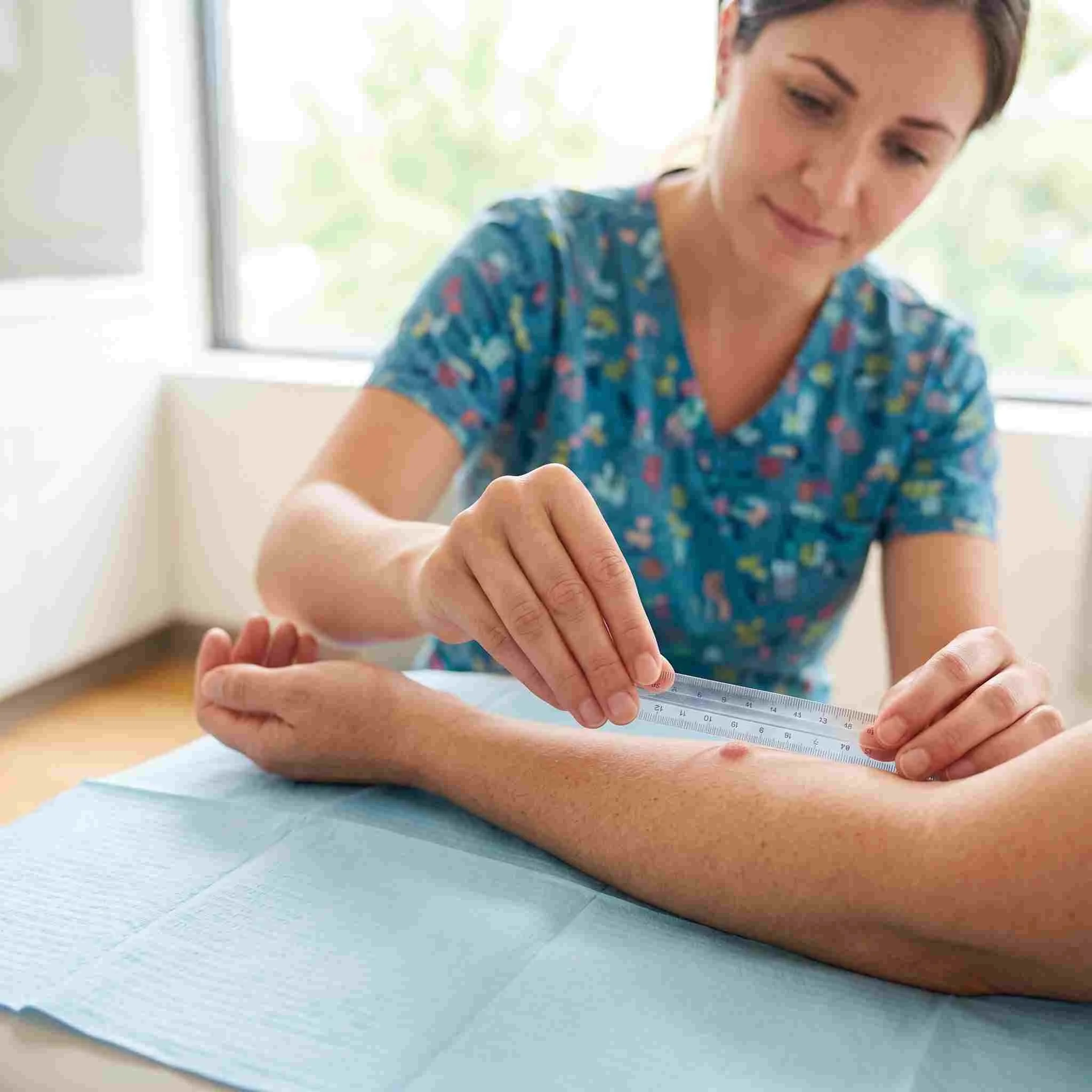
Learning how to read a PPD is simple once you know what to look for: a provider measures the firm raised bump, called induration, 48 to 72 hours after the shot, and reads the result in millimeters. Some people are asked to do the test twice, which is the two-step method. This guide explains both, calmly.
A TB test can feel stressful, especially if the word tuberculosis is involved. Take a breath, because most of the worry comes from not knowing how the test works.
By the end, you will understand what the numbers mean, why two steps are sometimes needed, and what a positive result really says.
Why Do Some People Need a Two-Step TB Test?
The two-step test is used to get an accurate starting point, mainly for people who will be tested again over time, like health care and care-facility staff. The Centers for Disease Control and Prevention recommends it for baseline testing so a future result is not misread.
Here is the reason behind it. If someone was infected with TB long ago, their skin test reaction can fade over the years. The first test may then read negative even though the body remembers the germ.
That first test can wake up the immune memory. When a second test is given one to three weeks later, the reaction may now show up as positive. This is called a boosted reaction, and it points to an old infection, not a new one.
Think of it as jogging the immune system's memory rather than causing an infection. The two-step test does not give you TB or make you sick. It simply asks the body twice, so a faint old memory has a chance to show itself.
The two-step test sorts this out early. Without it, a later positive test could be mistaken for a brand-new infection, which would mean needless worry and extra evaluation.
Not everyone needs two steps. It is mainly for people starting a job or a role where they will be retested from time to time, so their file has a trustworthy starting point. A one-time test for another reason usually does not need the second step.
How Do You Read a PPD Skin Test?
You read a PPD by measuring the firm, raised bump across the arm, not the redness, between 48 and 72 hours after the injection. MedlinePlus explains that you return to the provider in that window so they can check the reaction and measure it in millimeters.
Only the hard, raised area, the induration, is measured. Redness alone does not count, because plenty of people get some redness that means nothing.
Timing matters too. If you miss the 48-to-72-hour window, the test usually has to be repeated, because a reading taken too early or too late is not reliable. Booking the reading visit when you get the first shot keeps things simple.
What size counts as positive depends on your health and risk. The same millimeter reading can be positive for one person and negative for another.
| Induration Size | Usually Considered Positive For |
|---|---|
| 5 mm or more | People with HIV, recent close contact with active TB, or chest x-ray signs of past TB |
| 10 mm or more | Health care workers, recent immigrants from high-TB countries, and people with certain health conditions |
| 15 mm or more | People with no known TB risk factors |
If you want the step-by-step on measuring, our guide to reading a PPD and counting induration in millimeters goes deeper.
Does a Positive PPD Mean I Have Tuberculosis?
No. A positive skin test means your body has met the TB germ at some point, not that you are sick with TB right now. That difference is huge, and it is where most of the panic comes from.
A positive result usually points to latent TB infection. The CDC explains that people with latent TB carry the germ in a sleeping, inactive form, feel fine, and have no symptoms.
Active TB disease is different. It makes people sick with things like a lasting cough, fever, or weight loss. A skin test alone cannot tell the two apart, so more checks are done before anyone draws conclusions.
So a positive PPD is a signal to look further, not a diagnosis. Try not to jump ahead until the full picture is in.
Am I Contagious if My TB Test Is Positive?
If you have latent TB, you are not contagious. People with sleeping TB germs cannot spread them to others, and they can live completely normal lives.
Only active TB disease in the lungs or throat can spread to other people. That is a separate condition from a positive skin test, and it comes with symptoms.
This is why a positive test is not a reason to isolate yourself or panic. The next steps simply confirm which situation you are in.
Treating latent TB is also an option worth discussing. It lowers the chance that the sleeping germs ever wake up and cause disease later.
It also helps to know how TB actually spreads. It passes through the air when a person with active lung disease coughs or sneezes, and it takes close, repeated contact. A quick chat or a shared meal with someone who has latent TB carries no risk at all.
Can the BCG Vaccine Cause a False Positive?
Yes, it can. Many people born outside the United States received the BCG vaccine as children, and the CDC notes it can cause a false-positive skin test result.
If you had BCG, mention it to your provider, but do not assume your positive test is only from the vaccine. It still needs to be taken seriously and checked.
The effect of BCG also tends to fade over the years. A skin test done long after childhood vaccination is less likely to be positive from the vaccine alone, which is one more reason providers look at the whole picture rather than the number by itself.
There is a helpful workaround. A TB blood test, which is not affected by the BCG vaccine, is often the better choice for people who were vaccinated. It can give a clearer answer without the vaccine muddying the result.
What Happens After a Positive Test: Chest X-Ray and Next Steps?
After a positive skin test, the usual next step is a chest x-ray to look for signs of active TB in the lungs. CDC describes the skin test as one part of a fuller evaluation, not the final word.
If the chest x-ray is clear and you have no symptoms, you most likely have latent TB, not active disease. That is reassuring news, and it is the outcome for most people with a positive test.
Your provider will then talk with you about whether to treat the latent infection. Our guide to the next steps after a positive TB skin test walks through what to expect.
None of this happens all at once. It is a calm, step-by-step process, and each step usually brings more clarity, not less.
Sometimes the provider will also ask about your history and symptoms. Have you had a lasting cough, night sweats, or unexplained weight loss? Simple questions like these help sort a harmless old exposure from something that needs treatment.
Will a Positive TB Test Affect My Job or Move-In Clearance?
A positive test usually does not cost you a job or a care-facility spot, as long as active disease is ruled out. Most employers and communities want proof you are not contagious, which a clear chest x-ray and evaluation provide.
For care facilities in California, TB clearance is part of the move-in health checks. Our overview of TB clearance for assisted living and the TB test in the LIC 602A move-in process explain how it fits in.
The two-visit nature of the skin test can be a scheduling headache, since you must return in the reading window. If getting back is hard, a clinician who visits patients at home can place and read the test where you are.
The goal of all this is safety, not exclusion. Once your paperwork shows you are not contagious, a positive skin test rarely stands in your way.
It helps to keep copies of your results. A record of your baseline test, chest x-ray, and any evaluation saves you from repeating steps the next time a job or facility asks. Good paperwork turns a stressful requirement into a quick formality.
FAQ
How long do I wait between the two tests?
The second skin test is usually given one to three weeks after the first. This gap lets your provider see whether the first test boosted a faded reaction, which points to an old infection rather than a new one.
Can I get a TB blood test instead of the skin test?
Often, yes. A TB blood test needs only one visit and is not thrown off by the BCG vaccine. It is a good option for people who were vaccinated or who cannot easily return for a reading.
Does the skin test hurt or leave a mark?
You feel a brief sting when the small amount of fluid goes just under the skin. A little bump forms and usually fades within hours, and a positive reaction may itch but should not scar.
I had a positive test years ago, should I get another skin test?
Usually not. People with a past positive test are generally not given another skin test, since it can cause a stronger reaction. Tell your provider, who may use a blood test or a symptom check instead.
How long is TB clearance good for?
It depends on the employer or facility and state rules. Some accept a baseline result with a yearly symptom check, while others set their own timelines. Ask the specific program what they require.
Who is allowed to read my PPD?
A trained health professional, such as a nurse or clinician, should measure and record the result. Reading your own test is not reliable, since the firm induration is easy to misjudge without training.
