
Can a Senior Recovering From a Stroke Move Into a California RCFE? What the LIC 602A Must Show
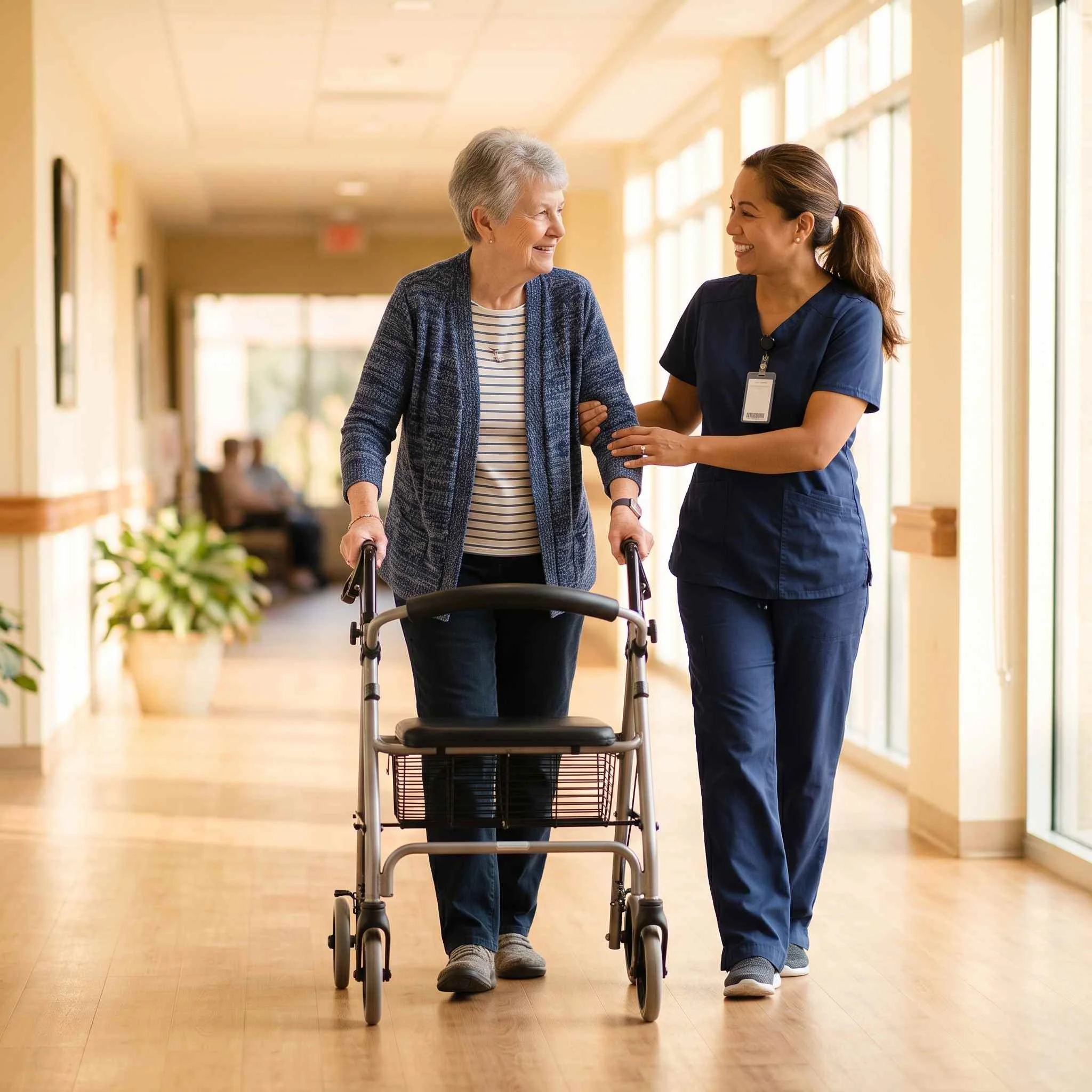
Yes, a senior recovering from a stroke can often move into a California RCFE (Residential Care Facility for the Elderly), as long as their care needs match what the facility is licensed to provide. The key document is the LIC 602A, the Physician's Report for RCFE. This form is completed by a physician and shows your parent's current health condition, whether they can move on their own (ambulatory or nonambulatory status), and any restricted health conditions that need special handling. If the report shows needs the home can safely meet, the door is usually open.
If you are reading this while sitting in a hospital hallway or sorting through discharge papers, take a breath. You do not have to figure this out alone. Below we walk through the stroke after effects that matter most for placement, what recovery looks like, and exactly what the LIC 602A must show so your parents can settle into the right home.
Understanding Stroke After Effects Before a Move
A stroke happens when blood flow to part of the brain is cut off, and the cells in that area become damaged. How your parent is affected depends on where the stroke happened and how large it was. Even after treatment, it is common for the after effects after a stroke to linger, and symptoms can continue for a year or longer.
How a Stroke Changes the Body and Mind
The effects of a stroke can range from barely noticeable to life-changing. Common stroke after effects include weakness or paralysis on one side of the body, trouble speaking or understanding words, memory and thinking changes, vision problems, and heavy fatigue. Depression and anxiety are also very common after a stroke, so emotional health matters just as much as physical healing. Knowing your parent's specific challenges helps you and the RCFE decide what daily support they need.
Effects of Stroke on the Left Side of the Brain
Because nerve signals cross over, a stroke on the left side of the brain affects the right side of the body. The left hemisphere controls most communication skills, problem-solving, and analyzing. So the effects of stroke on the left side of the brain often include trouble speaking, called aphasia, along with weakness or numbness on the right side, and trouble reading, writing, or working with numbers. When families read about the side effects of stroke on the left side of the brain, they are usually describing a parent who understands the world but struggles to get words out or move their right hand. You can learn more about these differences from Cleveland Clinic's guide to left and right brain strokes.
Effects of Stroke on the Right Side of the Brain
The effects of stroke on the right side of the brain show up on the opposite side of the body. The right hemisphere controls movement on the left side and helps with spatial awareness, emotions, and imagination. So the effects of stroke on the left side of the body, such as weakness or paralysis in the left arm and leg, usually trace back to a stroke on the right side of the brain. Right-brain strokes can also cause a person to neglect their left side, have a shorter attention span, or misjudge distances and bump into things. These spatial and safety issues are important to share honestly with any care home.
Breathing, Swallowing, and Other Everyday Concerns
Some stroke effects are easy to see, like a drooping arm. Others are quieter but just as important for safety in a residential setting.
Breathing After a Stroke
Parts of the brain handle automatic jobs like breathing and heart rhythm. When a stroke affects those areas or the muscles used to swallow, breathing after a stroke can become a real concern. The biggest risk is aspiration, which happens when food or liquid slips into the airway and lungs instead of the stomach. According to the American Stroke Association, a swallowing disorder called dysphagia can lead to poor nutrition, pneumonia, and disability if it is not managed. A stroke can also reduce sensation, so some people breathe in food without coughing, known as silent aspiration.
Why Swallowing Matters
Speech therapy helps people regain and improve the muscles used to talk, breathe, eat, and swallow, as Cleveland Clinic explains in its stroke overview. If your parent needs texture-modified food, thickened liquids, or help staying upright at meals, the care home must be able to follow those instructions. This is exactly the kind of detail the physician records so the RCFE knows what to expect.
What Recovery Really Looks Like
Recovery after a stroke is a journey, not a light switch. Understanding the timeline helps you set fair expectations and pick the right living arrangement.
The Stroke Recovery Timeline
The first three months after a stroke are usually the most important for recovery, when patients see the most improvement, according to Johns Hopkins Medicine's stroke recovery timeline. After six months, gains are slower but still possible, and some people keep improving 12 to 18 months later. Recovery depends on the severity of the stroke, how fast treatment came, and the type and intensity of rehabilitation. A stroke rehabilitation program truly helps, and Mayo Clinic notes that people who join a focused rehab program do better than most who do not.
Best Things to Do After a Stroke
Some of the best things to do after a stroke are simple but powerful. Start rehabilitation early, often within 24 to 48 hours in the hospital. Keep up with physical, occupational, and speech therapy. Practice daily living skills like dressing and bathing. Take medications as prescribed, watch for depression, and go to every follow-up. Mobility training may include learning to use a walker, cane, or ankle brace to relearn walking safely. Family support is one of the biggest factors in a good outcome, so your steady presence matters more than you know. For a broader look at the choices ahead, this guide on what happens after a senior can no longer live alone is a helpful starting point.
Can a Stroke Patient Go to Assisted Living or an RCFE?
This is the question that brought you here: can a stroke patient go to assisted living? In most cases, yes. In California, assisted living for seniors is provided through an RCFE. The real answer depends on how much daily help your parents need and whether the home can provide it.
When an RCFE Is a Good Fit
The American Stroke Association describes assisted living as the right choice for people who can mostly live on their own but need some help with things like meals, medication, and housekeeping, in its fact sheet on living at home after a stroke. If your parents can move around with some assistance, follow directions, and communicate their basic needs, an RCFE can be a warm, supportive fit. Many homes coordinate with visiting therapists so recovery continues after the move.
When More Care May Be Needed
If your parents have ongoing medical problems, need skilled nursing around the clock, or cannot move or communicate safely in an emergency, a skilled nursing facility may be more appropriate than an RCFE. Skilled home health can also bridge the gap. XL Care Home Health Agency provides skilled nursing plus physical, occupational, and speech therapy and home health aides across Los Angeles County, which can support recovery inside a residential care setting.
What the LIC 602A Must Show
The LIC 602A is the Physician's Report for RCFE. A licensed physician completes it, and it gives the care home a clear picture of your parent's health so they can decide if they can meet those needs.
Ambulatory vs Nonambulatory Status
One of the most important things the report shows is whether your parents are ambulatory or nonambulatory, meaning whether they can move away from danger without help. After a stroke that causes weakness or paralysis on one side, this status matters for fire safety rules and staffing. The physician records how your parent walks, whether they use a wheelchair or walker, and how much help they need.
Restricted Health Conditions and Special Care
The report also documents any restricted health conditions and special care needs, in general terms set by California licensing. For a stroke survivor, this might include help with swallowing precautions, wound care, catheter or incontinence care, diabetes management, or oxygen. The point is not to disqualify your parents but to make sure the home is set up to keep them safe.
Getting the Physician's Report Completed
The report must be completed by a physician, which can be hard to arrange when a parent is tired or hard to transport. A home visit can make this far easier. Doctor2me offers house-call physicians who can see your parents at home and complete forms and follow-up in a comfortable setting. If paperwork feels overwhelming, the team at lic602.com can help by having the form professionally completed for your family, so nothing gets missed or delayed.
How to Prepare for a Smooth Move
Gather your parent's medication list, rehab notes, and hospital discharge summary before you meet with a care home. Be honest about their needs, because a good match protects everyone. Plan the practical side too, from downsizing to funding. Senior Home Transitional Services helps families with senior moves, bridge loans, and real estate solutions when a home sale is part of the plan. And because a stroke can strike again, keep learning the warning signs. This local guide to the BE FAST stroke signs is worth reading with the whole family. With the right home, the right paperwork, and a little support, your parent's next chapter can be a safe and hopeful one.
FAQ
How many years can a stroke patient live?
There is no single survival number that fits everyone. Cleveland Clinic explains that outlook depends on the type of stroke, how quickly it was treated, which parts of the brain were affected, and the person's overall health. Managing risk factors and preventing another stroke gives the best chance for a longer, fuller life.
Can a stroke patient live in assisted living?
Often yes. The American Stroke Association says assisted living suits people who can mostly live on their own but need some help with meals, medication, and housekeeping. If your parents need skilled nursing around the clock or cannot move safely in an emergency, a skilled nursing facility may be a better fit.
How long does it take for a stroke patient to walk again?
It varies widely from person to person, and there is no set timeline. The most improvement usually comes in the first three months, and some people keep gaining even 12 to 18 months later. Mobility training with a walker, cane, or ankle brace helps many survivors relearn to walk safely.
What not to do after a brain stroke?
Do not skip rehabilitation, stop taking prescribed medications, or miss follow-up appointments, since these drive recovery and help prevent another stroke. Do not ignore depression or anxiety, which are very common. And never wait if new stroke symptoms appear, call 911 right away.
