
COPD and Oxygen in a California RCFE: What the LIC 602A Must Show
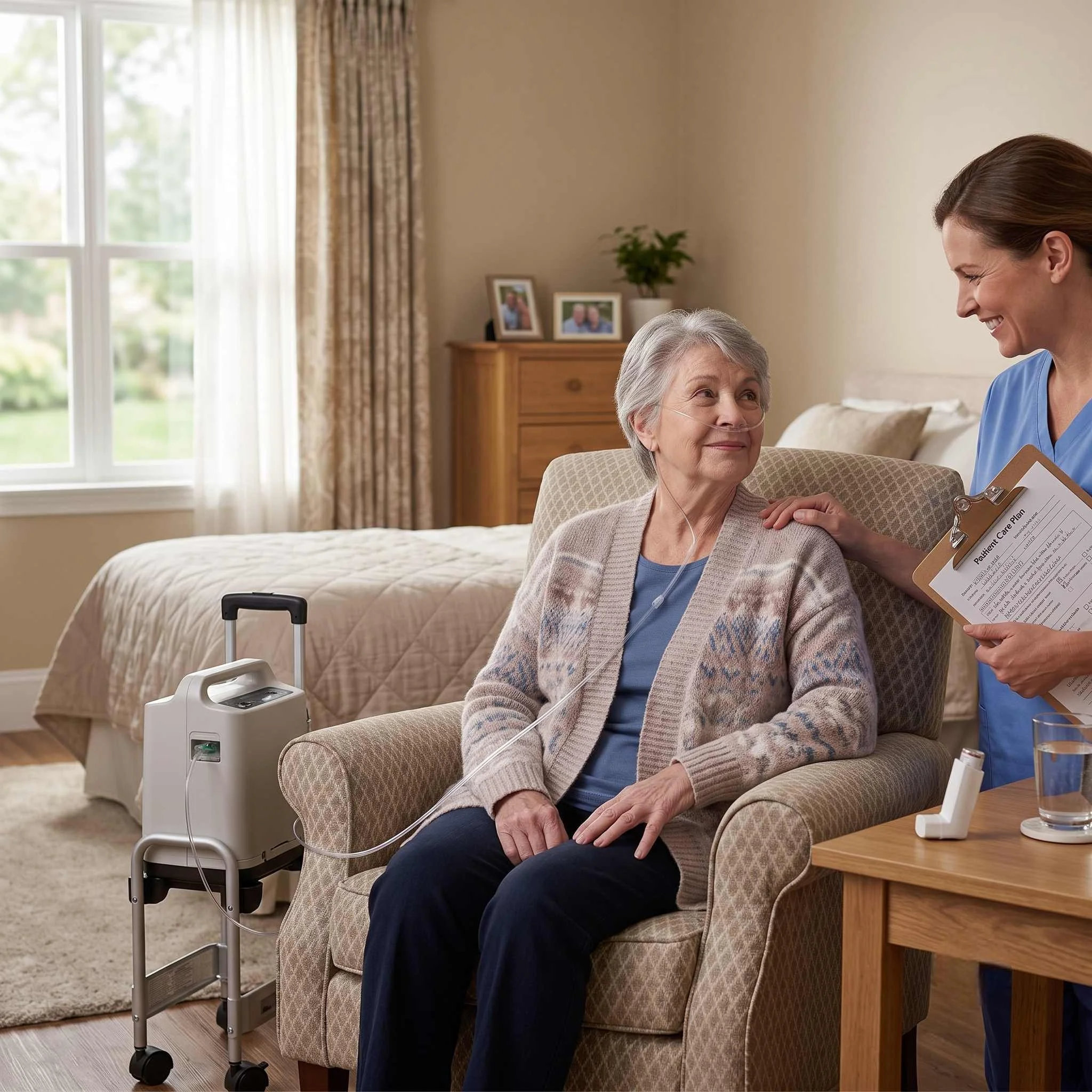
Image generated with AI for illustrative purposes only.
Yes, a senior with COPD who uses oxygen can often live in a California RCFE (a residential care facility for the elderly, also called assisted living). The key is paperwork. The physician's report (LIC 602) and its companion page (LIC 602A) must clearly show the person's health, their oxygen needs, and the care they require. When those forms are complete and accurate, the facility can decide with confidence that it can meet the resident's needs.
Getting these forms right can feel stressful when a parent is short of breath and time is tight. If the bureaucracy feels like too much, you do not have to figure it out alone. A service like lic602.com can prepare and file the LIC 602 and LIC 602A for you, so the medical facts are captured correctly the first time and the move is not delayed by a missing detail.
What COPD Is and Why It Matters
How Chronic Obstructive Pulmonary Disease Affects the Lungs
COPD stands for chronic obstructive pulmonary disease. It is a group of lung diseases that block airflow and make it hard to breathe. The two most common forms are emphysema and chronic bronchitis, and many people have a mix of both. In emphysema, the tiny air sacs in the lungs are damaged and lose their stretch. In chronic bronchitis, the airways stay swollen and make extra mucus. Either way, less air moves in and out. According to Cleveland Clinic, this damage is not reversible, but treatment can ease symptoms and slow the disease.
This chronic lung disease is common, especially in older adults. The CDC reports that nearly 16 million U.S. adults have COPD, and many more have it without knowing. Most people with COPD are at least 40 years old, and up to 75% of people with COPD smoke or used to smoke, according to MedlinePlus. It is also a serious condition. The National Heart, Lung, and Blood Institute notes that COPD is the sixth leading cause of death in the United States.
Common COPD Symptoms to Watch For
COPD symptoms often start mild and get worse over months and years. Knowing the early lung disease symptoms helps families act sooner. Per the CDC, common signs and symptoms include:
Frequent coughing or wheezing
Shortness of breath during everyday activities like walking or dressing
Trouble taking a deep breath
Extra phlegm or mucus
As the disease moves along, flare-ups (called exacerbations) get stronger and happen more often. During a flare-up, breathing gets much harder, mucus thickens, and a person may need urgent care. Low oxygen in the blood is one reason a doctor may prescribe home oxygen, which is where the RCFE questions begin.
Can a Senior With COPD and Oxygen Live in an RCFE?
What an RCFE Can and Cannot Do
An RCFE is a non-medical home. It offers a room, meals, help with daily tasks, medication reminders, and a safe place to live. It is not a hospital or a nursing home, so it does not provide around-the-clock skilled nursing. Still, many RCFEs care for residents who have chronic lung disease and use oxygen every day. The question is not the diagnosis by itself. The question is whether the facility can safely meet the resident's specific needs.
California allows an RCFE to accept a resident who uses oxygen when the facility can support that need and staff understand the safety rules that come with it. This is why the physician's report matters so much. It tells the facility exactly what the resident can do on their own and where they need help.
Families often worry that oxygen will rule out assisted living. In most cases it does not. What changes is the level of detail a facility needs before it says yes. Staff want to know the resident can be kept safe, that fire rules are followed, and that help is close if breathing gets worse. A clear physician's report answers those worries before they become a reason to turn a resident away.
Oxygen Use in Assisted Living
Home oxygen helps a person breathe easier when their blood oxygen level is low. As MedlinePlus explains, oxygen therapy can be used all the time or only at certain times, depending on the person's needs. In an RCFE, this means staff must know how to store oxygen safely, keep it away from open flames, and help a resident who cannot manage the equipment alone. The LIC 602A is where the doctor spells out whether the resident can handle their own oxygen or needs help, and how much oxygen is ordered.
What the LIC 602A Must Show
The Physician's Report and the Needs Appraisal
The LIC 602 is the physician's report for RCFE admission. The LIC 602A is a companion page that adds more detail about the resident's condition and care. Together, they give the facility a clear medical picture. For a senior with COPD and oxygen, these forms must be filled out with real, current facts, not guesses. A vague or incomplete report is the most common reason an admission stalls.
The physician's report should list the diagnosis of chronic obstructive pulmonary disease along with any other health problems. It should note the person's mental status, whether they can walk on their own, and how much help they need with daily tasks like bathing and dressing. It should also state whether the resident is ambulatory or needs help to leave the building in an emergency, since breathing problems can affect how fast a person moves.
Details That Matter for a Resident on Oxygen
For an oxygen user, the LIC 602A must be specific. Clear paperwork protects both the resident and the facility. The report should make plain:
The exact oxygen order, such as the flow rate and whether it is needed all day or only at night
Whether the resident can set up and manage the oxygen alone, or needs staff help
A full, current list of COPD medication, including inhalers and any nebulizer treatments
Any need for respiratory therapy or breathing treatments, and how often
Warning signs staff should watch for and what to do during a flare-up
When these details are missing, a facility may say no, not because it cannot care for the resident, but because it cannot tell from the form what the resident truly needs. Accurate forms turn a hard maybe into a confident yes. This is where careful help with the LIC 602A pays off, so nothing important is left blank.
COPD Treatment and Management in Assisted Living
COPD Medication and Respiratory Therapy
There is no cure for COPD, but good COPD treatment can control symptoms and reduce flare-ups. Common COPD medication includes inhaled bronchodilators, which relax the muscles around the airways to open them up, and inhaled steroids, which lower swelling. Some people use a nebulizer, a machine that turns liquid medicine into a mist. As Cleveland Clinic describes, oxygen therapy and pulmonary rehabilitation are also central to treatment.
Respiratory therapy, often part of a pulmonary rehabilitation program, teaches breathing techniques, safe exercise, and energy-saving habits. In an assisted living setting, staff can help make sure a resident takes their inhalers correctly and on time, which is one of the most common gaps in COPD management. The LIC 602A should note if the resident needs help using their inhaler or nebulizer.
Everyday COPD Management and Vaccines
Day-to-day COPD management is about steady routines. Taking medicine as prescribed, staying active within safe limits, eating well, and avoiding smoke and strong fumes all help. Because lung infections can trigger a serious flare-up, staying current on vaccines matters. The ALA lists flu, pneumococcal, and COVID-19 vaccines as important steps for people with COPD. A calm, clean, supportive home like an RCFE can make these habits easier to keep.
Families should also plan for bad-air days. Wildfire smoke and heat can make chronic lung disease symptoms worse. A good facility keeps residents indoors with clean air during these times and knows how to respond if a resident's breathing changes.
When to Get Help
Warning Signs of a Flare-Up
Even with strong care, COPD flare-ups can happen. Staff and family should know the warning signs and act fast. Call the doctor or seek care if a resident has:
Shortness of breath that is worse than usual, or trouble talking
More coughing, wheezing, or thicker mucus, or mucus that changes color
A fever or other signs of a chest infection
New confusion, extreme tiredness, or a bluish tint to the lips or fingertips
These changes can signal a serious problem that needs quick treatment. Getting help early can keep a small flare-up from turning into a hospital stay. When a resident's needs change, the physician's report may need an update too, so the facility always has an accurate picture on file.
FAQ
Can someone with COPD live in assisted living?
Yes. Many people with COPD live in an RCFE or assisted living. The facility must be able to meet the person's needs, and the physician's report has to show clearly what care and oxygen the resident requires.
What is the LIC 602A form used for?
The LIC 602A is a companion page to the LIC 602 physician's report for California RCFE admission. It adds detail about a resident's medical condition, care needs, and any special needs like oxygen so the facility knows if it can serve them safely.
Can you use oxygen in a residential care facility for the elderly?
Often, yes. California allows an RCFE to accept a resident who uses oxygen when the facility can support that need and follow oxygen safety rules. The doctor's report should state the oxygen order and whether the resident can manage it alone.
Is COPD a disability that affects assisted living admission?
COPD by itself does not block admission. What matters is the level of care a person needs and whether the facility can provide it. Complete, accurate paperwork is the best way to show a facility it can meet those needs.
What are the early warning signs of a COPD flare-up?
Watch for shortness of breath that is worse than normal, more coughing or wheezing, thicker mucus or a color change, and fever. New confusion or bluish lips are urgent signs. Getting care early can prevent a hospital stay.
