
Preparing for the LIC 602A Physician’s Visit: A Comprehensive Checklist for Families
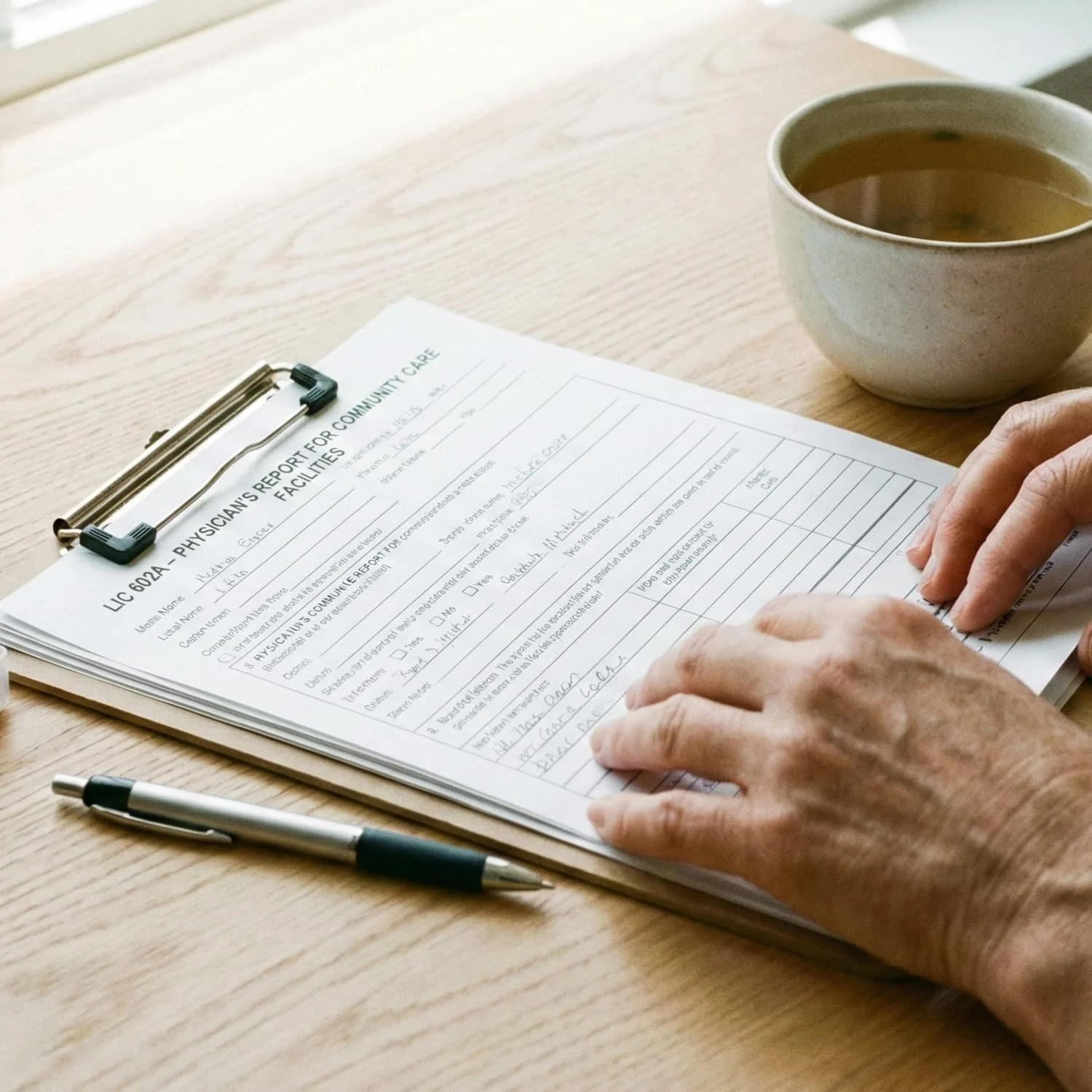
Image generated with AI for illustrative purposes only.
The LIC 602A (Physician’s Report) is a mandatory medical document for any senior planning to move into a Residential Care Facility for the Elderly (RCFE) in the state of California. To ensure a smooth and successful doctor’s appointment, families must arrive prepared with the form itself, a current list of all medications, proof of tuberculosis (TB) clearance, and detailed information regarding the patient's dietary needs. This document serves as the legal confirmation that a facility can safely and effectively provide the necessary level of care for a new resident.
Understanding the LIC 602A Form and Its Importance
In the California licensed care system, the LIC 602A form acts as a vital communication bridge between a primary care physician and the facility administration. It documents the individual’s physical and mental health status, their level of mobility, and their specific needs for daily assistance.
Per the California Department of Social Services (CDSS) regulations, a Physician’s Report must be completed no more than six months prior to the move-in date. However, many facilities prefer data from the last 30 days to ensure they have the most current clinical picture of the resident's health.
Checklist: What Families Should Prepare for the Appointment
Thorough preparation helps avoid follow-up visits and delays in the admission process. It is recommended to gather the following information beforehand:
1. The Current LIC 602A Blank Form
Families should ensure they are using the most recent version of the form, which is available on the official CDSS website. It is helpful to pre-fill the identification section (patient name, date of birth, and address) to save time during the actual consultation.
2. Detailed Medication List
The physician is required to list every medication the patient is currently taking. Families should provide a clear table including:
The name of the medication and the exact dosage.
The administration schedule (e.g., morning, afternoon, evening).
The purpose of the prescription (e.g., blood pressure control or diabetes management).
The method of administration (tablets, drops, or injections).
3. Tuberculosis (TB) Clearance
This is a critical health requirement in California. The form is considered incomplete without a clear indication of the patient’s TB status.
If a TB test was performed within the last year, a copy of the results should be brought to the appointment.
If no recent test exists, the physician will perform one during the visit (either a skin test or a QuantiFERON blood test).
If the patient has a history of positive skin tests, a current chest X-ray result will be required.
4. Dietary Needs and Allergies
Any nutritional restrictions must be clearly documented—ranging from diabetic-friendly menus to mechanical diet requirements (such as pureed food). Additionally, all known allergies to medications or food products must be recorded.
5. Cognitive Health Assessment
If the individual shows signs of dementia or Alzheimer’s disease, the physician must complete the specialized section regarding cognitive status. Families should bring any previous neurology reports or memory test results (such as the MMSE) to assist the doctor in this evaluation.
Key Points to Verify Before Leaving the Doctor’s Office
Before concluding the appointment, it is essential to double-check that all sections of the form have been accurately completed.
| Form Section | What to Verify |
| Ambulatory Status | Does the form clearly state if the person can walk independently or requires assistive devices (walker, cane, or wheelchair)? |
| TB Clearance | Is there a definitive mark confirming the absence of active tuberculosis? |
| Self-Administration | Did the doctor indicate whether the patient can manage their own medications or require staff supervision? |
| Physician’s Signature | Is the form signed, dated, and stamped by the physician on every required page? |
Common Pitfalls to Avoid
Errors on the LIC 602A can lead to a facility denying admission until the document is corrected. The most frequent mistakes include:
Vague "As Needed" (PRN) Instructions: If a medication is taken as needed, the doctor must specify the exact symptom for its use (e.g., "for pain rated above a 6 on a scale of 1-10").
Expired Data: Using lab results or exams that fall outside the state-mandated timeframes.
Missing Signatures: Overlooking a signature line on one of the multiple pages of the document.
A correctly completed LIC 602A ensures that facility staff are fully informed of a resident’s needs, guaranteeing safety and comfort from the very first day of residency.
