
Moving Beyond the Fear of Falling: Mastering Mobility and California Bureaucracy for Your Loved Ones
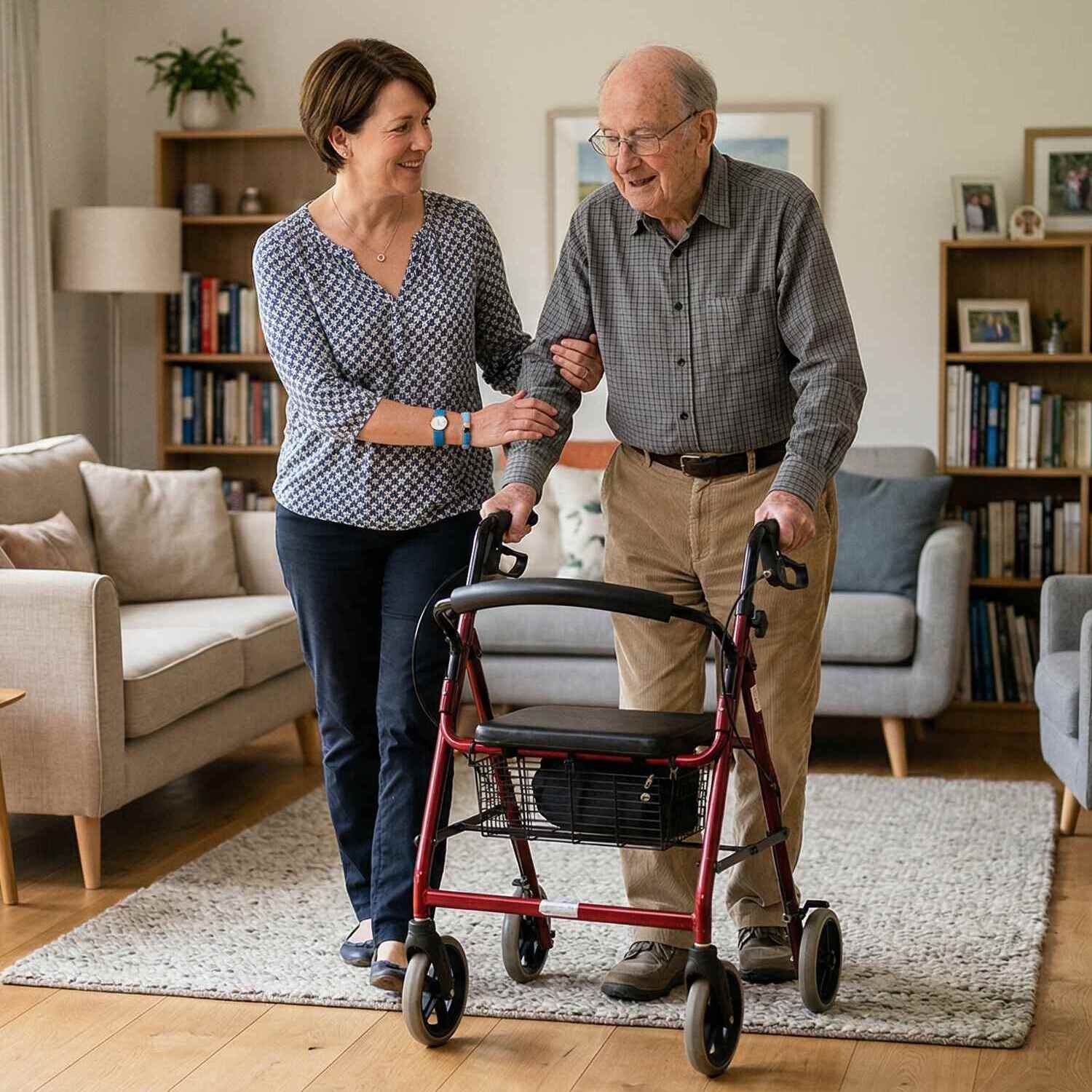
Image generated with AI for illustrative purposes only.
There comes a moment in the life of every adult child when the roles reverse. You notice your mother hesitating at the top of the stairs or your father reaching for the furniture to steady his gait. In California, where the sun shines bright but the administrative hurdles of senior care can feel like a dark cloud, this transition is particularly taxing. You are likely juggling a career, your own family, and the sudden weight of choosing the right patient lifts for home while navigating the complex requirements for Assisted Living (RCFE) placement.
This overview is designed to help you understand the essential tools of independence - from walkers for seniors to the sophisticated Hoyer patient lift - and how to manage the paperwork that often stands in the way of proper care.
When "Just Walking" Becomes a High-Stakes Challenge
Aging is a complex physiological process, and mobility loss is rarely about "just getting old." According to data from the Centers for Disease Control and Prevention (CDC), falls are the leading cause of injury-related deaths for those over 65. In California alone, thousands of seniors face emergency room visits annually due to preventable falls.
Mobility issues usually stem from a combination of factors:
Neurological Decline: Conditions like Parkinson’s or post-stroke recovery can disrupt the brain's communication with the legs.
Cardiovascular Fatigue: When the heart or lungs struggle, even a short walk to the kitchen can cause the dizziness that leads to a tumble.
The Fear of Falling: Paradoxically, the fear of falling often leads seniors to move less, which weakens muscles and makes a fall even more likely.
Identifying the root cause is essential before investing in medical walkers or other equipment. It allows you to move from reactive worrying to proactive safety management.
The Battle for Balance: Choosing the Right Medical Walkers
When a cane is no longer sufficient to provide a stable base, it is time to look at walkers for seniors. The goal is to match the device to the user's remaining strength and environment. A device that is too complex might cause a trip, while one that is too simple might not offer enough support for a walk in a local park.
1. The Standard Walker: The Anchor of Stability
The standard walker is a three-sided aluminum frame without wheels. To move, the senior must lift the walker, place it forward, and then step into the frame.
Pros: It provides the most rigid support and cannot roll away.
Cons: It requires significant upper body strength and can be tiring for long distances.
2. Two-Wheeled Models: The Natural Gait Solution
These walkers have wheels on the front legs and "skis" or glides on the back. They allow the senior to maintain a more natural walking rhythm without lifting the device entirely off the ground.
3. Rollators: Independence for the Active Senior
Four-wheeled walkers, or rollators, come with hand brakes and a built-in seat. They are perfect for seniors who have good balance but tire easily and need a place to sit during outings.
4. The Upright Walker: The 2026 Innovation
One of the most significant advancements in senior mobility is the upright walker. Instead of hunching over low handles, the user stands tall, resting their weight on padded forearm supports. This design improves posture, expands lung capacity, and allows the user to look forward rather than at the ground.
Comparison of Walking Support Devices
| Feature | Standard Walker | 2-Wheel Walker | Rollator | Upright Walker |
|---|---|---|---|---|
| Stability | Maximum | High | Moderate | High |
| Effort | High (Lifting) | Moderate | Low | Low |
| Ideal Use | Indoor / Short Distances | General Indoor | Outdoor / Malls | Rehab / Long Walks |
| Posture | Stooped | Slightly Stooped | Neutral | Fully Upright |
When a Chair Becomes Freedom: Wheelchairs and Lifts
For many seniors, a wheelchair is not a sign of giving up; it is the "passport" that allows them to remain part of the family. Whether it is a trip to a granddaughter’s graduation or a doctor's appointment, the right chair matters.
Manual vs. Power Chairs
Manual chairs are lightweight and easy to transport, but they require either a strong user or a dedicated caregiver to push. Power chairs offer total independence but are heavy and require specialized vehicles for transport.
Wheelchair Lifts: Protecting the Caregiver
If you are helping your parents stay at home or taking them out frequently, wheelchair lifts are an essential investment. These mechanical platforms can be installed on vehicles or used to navigate stairs. They protect your back from the strain of lifting a 50-pound chair, ensuring you can remain a caregiver for the long haul.
The Hoyer Patient Lift: Dignity and Safety for Heavy Care
For seniors with severe mobility limitations - such as those recovering from a major stroke or managing advanced dementia - a Hoyer patient lift is a necessity. This U-shaped floor lift uses a sling to safely "hover" a patient from a bed to a chair or bathroom without any manual lifting.
Using patient lifts for home care isn't just about the patient; it’s about the caregiver. Back injuries among family caregivers are incredibly common. A mechanical lift ensures that transfers are smooth, dignified, and, most importantly, safe for everyone involved.
The Bureaucratic Maze: California, RCFEs, and the LIC 602 Form
If you are transitioning your loved one into a Residential Care Facility for the Elderly (RCFE) or Assisted Living, you will inevitably encounter the "Physician’s Report," known in California as the LIC 602.
This document is the "gatekeeper" of senior care. On this form, a doctor must accurately detail the senior's mobility status.
Do they use walkers for seniors independently?
Do they require a hoyer patient lift for transfers?
Can they evacuate the building in an emergency?
The way these questions are answered dictates the "Care Level" the facility assigns, which directly impacts your monthly costs. An error or a vague description can lead to a facility rejecting your parent or overcharging you for care that isn't actually required.
Stop Drowning in Paperwork
We know the exhaustion that comes with senior care. Between coordinating with doctors and researching medical walkers, the last thing you want to do is fight with state-mandated forms. The stress of getting the LIC 602 "exactly right" can be overwhelming.
You don't have to carry this burden alone. Our service at lic602.com is dedicated to taking the bureaucratic weight off your shoulders. We professionally manage the completion of these complex forms, ensuring they are accurate, timely, and optimized for your loved one's specific care needs. Instead of losing sleep over administrative errors, you can spend that time making memories with your parents. Let the experts handle the paperwork while you handle the love. Visit https://www.lic602.com/request-form to start delegating the bureaucracy today.
Practical Tips for a Safe Home Environment
Whether your parent is staying home or visiting from an RCFE, a "fall-proof" environment is key:
Eliminate Rugs: Even the best medical walkers can catch on a loose rug corner. Secure them with double-sided tape or, better yet, remove them entirely.
Lighting is Life: Install motion-sensor nightlights along the path to the bathroom. Poor lighting is a major contributor to nighttime falls.
The "Call Before You Fall" Approach: Consult with specialists like Call Before You Fall to install high-quality grab bars and ramps. Having professional-grade safety features installed by experts ensures they won't pull out of the wall when your parents need them most.
Footwear Matters: Ensure your loved one has sturdy, non-slip shoes with backs - no loose slippers.
Summary: Focus on the Person, Not the Equipment
Choosing between an upright walker, a standard walker, or a Hoyer patient lift is about more than just hardware - it is about the quality of life. Each piece of equipment is a tool designed to bridge the gap between physical limitation and emotional independence.
In California, navigating the path of senior care requires both the right equipment and the right documentation. By working with professionals for home safety and delegating your LIC 602 paperwork to experts, you can strip away the stress and focus on what truly matters: your family.
FAQ
Does Medicare Part B cover the cost of walkers and wheelchairs?
Yes, Medicare Part B typically covers manual wheelchairs and medical walkers as Durable Medical Equipment (DME) when prescribed by a healthcare provider for use in the home. You are generally responsible for 20% of the Medicare-approved amount after meeting your annual deductible.
What is the main difference between a standard walker and a rollator?
A standard walker offers the highest level of stability because it has no wheels and must be lifted, making it ideal for those with significant balance issues. In contrast, a rollator has four wheels, hand brakes, and a built-in seat, providing better maneuverability for seniors who can walk but need frequent rest breaks.
How do I know if my parents require a Hoyer patient lift for home use?
A hoyer patient lift is usually necessary when a senior has severe mobility limitations and can no longer assist with "stand-pivot" transfers safely. Using a mechanical lift protects caregivers from back injuries and ensures the patient is moved securely between a bed, wheelchair, or bathroom.
Why is the LIC 602 Physician’s Report critical for California RCFEs?
The LIC 602 form is a mandatory medical assessment that California facilities use to determine a resident's necessary care levels and staffing needs. Accurate documentation of mobility aids on this form ensures your loved one receives the correct level of transfer assistance and prevents the facility from overcharging for care.
Are upright walkers better than traditional models for seniors with back pain?
Upright walkers are often preferred for back pain because they allow the user to maintain a vertical posture instead of slouching over low handles. By supporting the user's weight through the forearms, these devices reduce spinal compression and improve overall respiratory function during exercise.
Can I bring my own electric scooter to an Assisted Living facility?
Most Assisted Living and RCFE facilities allow electric scooters, but they may require a safety evaluation to ensure the resident can operate the device without endangering others. It is important to check the facility's specific policy regarding battery charging and doorway clearance before moving in.
References
California Department of Social Services (LIC 602) - https://www.cdss.ca.gov/cdssweb/entres/forms/english/lic602.pdf
Centers for Disease Control and Prevention (Senior Falls) - https://www.cdc.gov/falls/index.html
Medicare.gov (Durable Medical Equipment) - https://www.medicare.gov/coverage/wheelchairs-scooters
What is a Hoyer Lift? — https://www.shop-orthopedics.com/blogs/post/what-is-a-hoyer-lift?
