
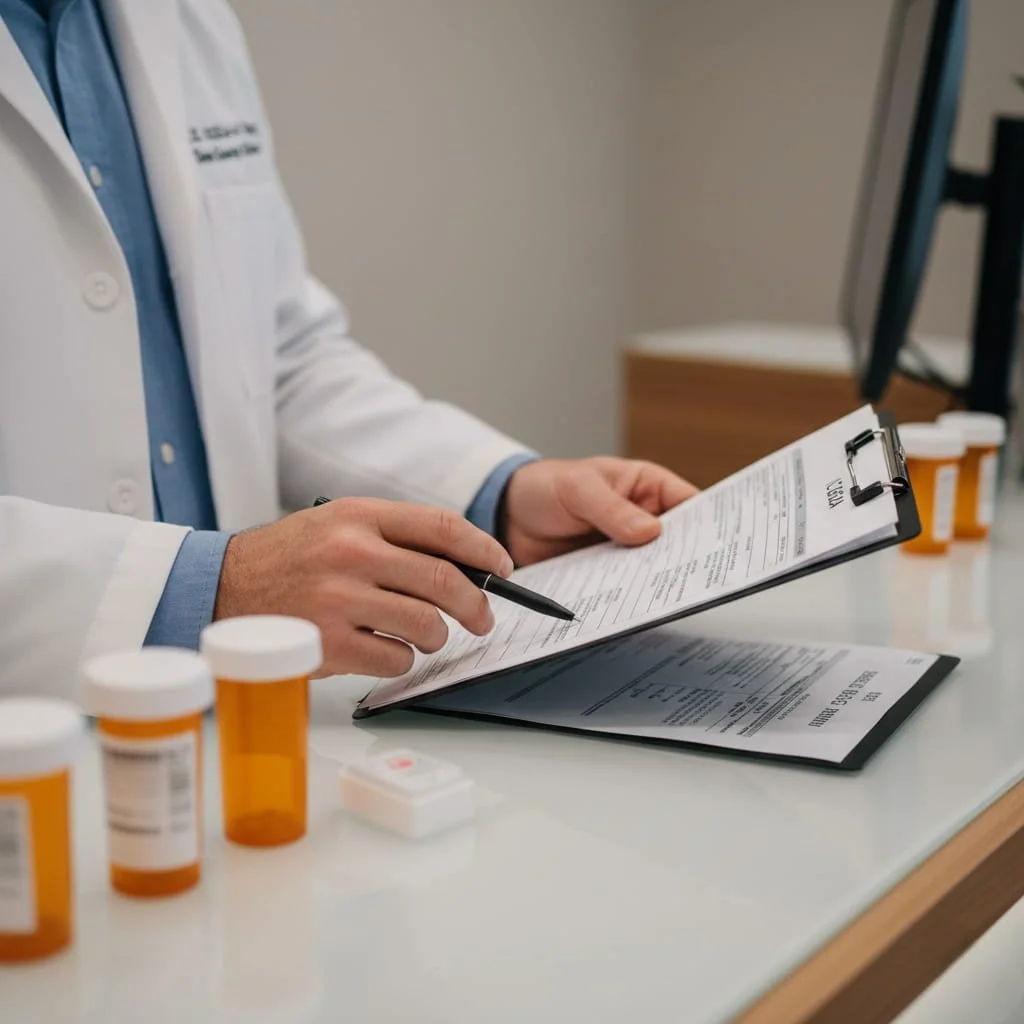
Image generated with AI for illustrative purposes only.
For pharmacies serving Residential Care Facilities for the Elderly (RCFEs) in California, management medication is more than just dispensing pills. It is a high-stakes process where a single form can protect a patient’s life and ensure the pharmacy’s legal standing.
At the heart of this process is the LIC 602A form (Physician's Report). This document is the clinical foundation that confirms a resident’s medical suitability for a non-medical care environment and outlines exactly what medications they require.
What is the LIC 602A and Why is it Necessary?
A common question in the industry is: “What is regulatory compliance?” In the RCFE context, it means following the rules that guarantee resident safety. The LIC 602A is the cornerstone of these rules.
Medical Clearance: This document serves as official confirmation that a resident’s physical and mental health allow them to live in an RCFE rather than a hospital.
Medication Authorization Form: By law, facility staff cannot assist a resident with medications without a physician’s written authorization, which is captured in this form.
Medication Reconciliation: When a resident moves from a hospital, there is a high risk of medication errors. The NIH and Mayo Clinic emphasize that a single "source of truth," like the LIC 602A, helps prevent dangerous therapeutic duplications.
Protecting Health and Medication Safety
As people age, the body reacts differently to treatment; the liver and kidneys process medication more slowly, increasing the risk of adverse effects.
Cognitive and Behavioral Monitoring
The Mayo Clinic notes that early diagnosis of dementia is critical for proper care. On the LIC 602A, the physician must specify the level of cognitive impairment. For the pharmacy, this is a signal to closely monitor the use of sedatives or psychotropic drugs to avoid over-medication.
Fall Prevention
Using data from the form, the pharmacist checks medications against the "Beers Criteria"—a list of drugs that often cause dizziness and falls in the elderly.
Functional Adaptation
If a resident has vision problems or tremors, the pharmacy must adapt the packaging. In these cases, a medication dispenser for elderly or specialized blister packs that are easy to open should be used.
The Role of Technology in Medication Management
Modern management medication is becoming digital. Advanced pharmacies use electronic Medication Administration Records (eMAR) to stay connected with facilities.
Real-Time Updates: As soon as a doctor changes a dosage on the LIC 602A, the data can be synchronized with the pharmacy, eliminating "human factor" errors.
Dosing Accuracy: According to CDC standards, using the correct tools (such as oral syringes instead of household spoons) is a mandatory safety requirement.
Pharmacy Safety Checklist
| What to Check in the LIC 602A | Why It Matters |
|---|---|
| Cognitive Status | Helps identify dementia risk and monitor behavior. |
| Kidney/Liver Function | Allows the doctor and pharmacist to adjust medication dosages safely. |
| Allergy List | Prevents dangerous reactions to new medications. |
| Self-Administration Status | Determines whether medication can be taken independently or requires assistance. |
A current LIC 602A is not just "paperwork for the archives." As the Mayo Clinic states, being informed is the best defense against medical errors. For the pharmacy, it provides legal protection and guarantees that every resident receives the treatment that is right for them.
References
CDSS (California Department of Social Services) — LIC 602A: Physician's Report for Residential Care Facilities for the Elderly
California Legislative Information — CCR Title 22, Section 87458: Medical Assessment
CMS (Centers for Medicare & Medicaid Services) — Medication Management and Safety in Long-Term Care
CDC (Centers for Disease Control and Prevention) — Medication Safety for Older Adults
NIH (National Institutes of Health) — The Importance of Medication Reconciliation during Transitions of Care
Mayo Clinic — Dementia: Diagnosis and Treatment
Kaiser Permanente Division of Research — Improving Medication Adherence in the Elderly Population
AGS (American Geriatrics Society) — Updated AGS Beers Criteria® for Potentially Inappropriate Medication Use in Older Adults
ISMP (Institute for Safe Medication Practices) — Targeted Medication Safety Best Practices for Community Pharmacy
California State Board of Pharmacy — Pharmacy Law and Regulations
