
Can a Senior with a G-Tube Live in a California RCFE?
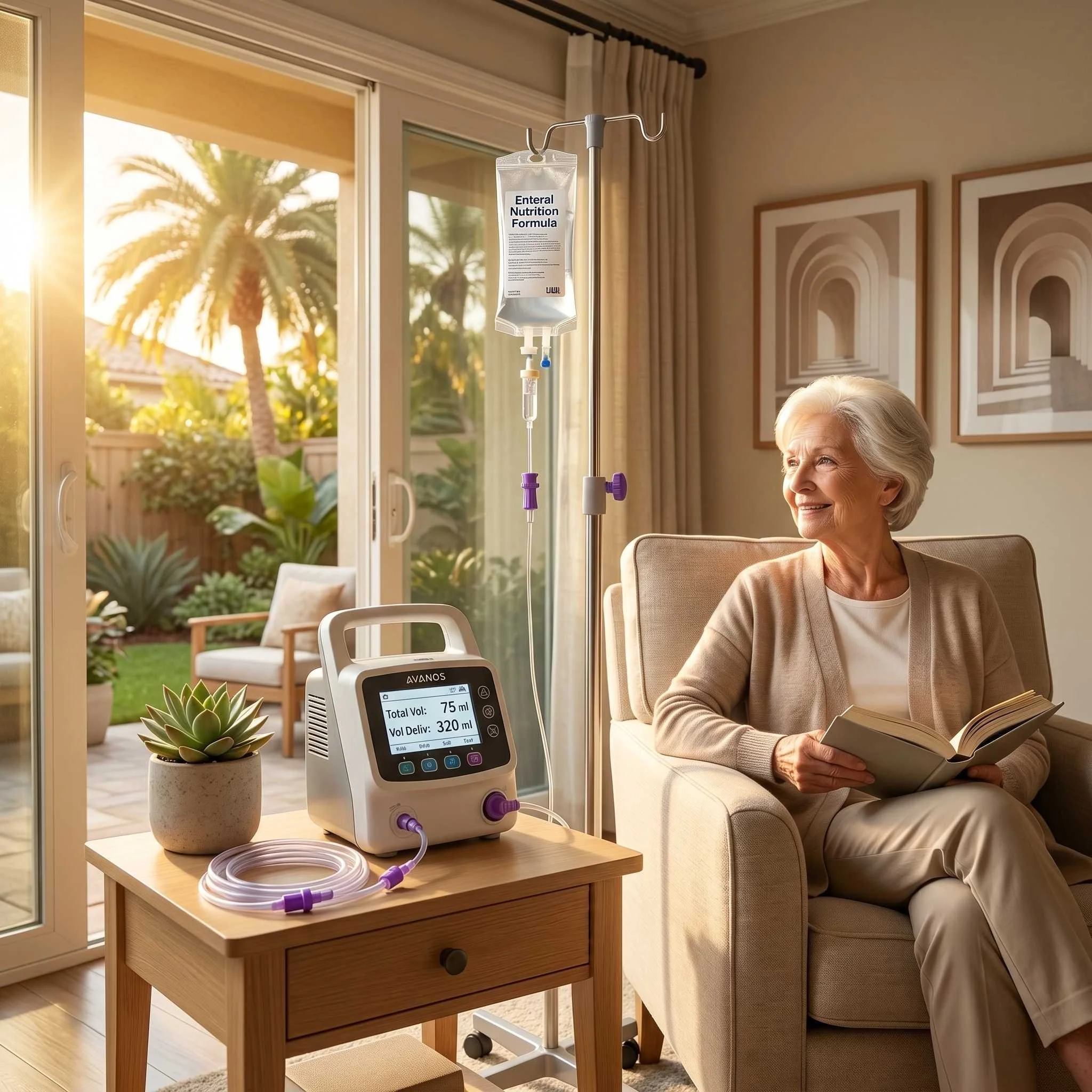
Image generated with AI for illustrative purposes only.
Yes, a senior with a gastrostomy tube (G-tube) can legally reside in a California Residential Care Facility for the Elderly (RCFE) if the facility obtains a formal "Health Condition Exception" based on an accurately completed LIC 602A form. While California law initially classifies enteral feeding as a "prohibited condition," families can navigate this by proving the resident’s condition is stable and that licensed medical professionals manage the tube. This transition requires precise coordination between the physician, the facility, and a third-party home health agency to satisfy the strict requirements of Title 22.
Why Does a G-Tube Cause Immediate Rejection in California RCFEs?
Understanding the "Prohibited Condition" Status
According to the California Code of Regulations, Title 22, Section 87615, certain medical conditions are prohibited in a social-model assisted living environment. A G-tube is on this list because it involves invasive medical equipment that requires specialized nursing knowledge. RCFEs are primarily residential, not clinical, meaning their standard staff members are not licensed to administer medical treatments.
The Fear of Regulatory Citations
Administrators in cities like Pasadena or Thousand Oaks often issue rejections because they fear "Type A" citations from the Department of Social Services. If a facility accepts a G-tube resident without the proper "Exception" paperwork, they risk heavy fines or losing their license. The rejection is rarely about the resident’s personality; it is a defensive move against the complex bureaucracy of California healthcare laws.
The Gap Between Social Care and Medical Care
RCFEs focus on Activities of Daily Living (ADLs) such as bathing and dressing, while a G-tube requires "Skilled Nursing" care. When a facility hears "G-tube," they see a resident who may belong in a Skilled Nursing Facility (SNF). To bridge this gap, the family must prove that medical care is "outsourced" to a licensed agency, leaving the RCFE to focus on the social and residential aspects of the senior's life.
| Feature | Social Model (RCFE) | Medical Model (SNF) |
|---|---|---|
| Primary Goal | Quality of life and socialization | Clinical stabilization and recovery |
| Staffing | Caregivers and Med-Techs | RNs, LVNs, and MDs on-site 24/7 |
| G-Tube Role | Allowed only with a State Exception | Standard part of medical care |
| Environment | Private apartment or room | Hospital-style ward or semi-private room |
What Are the Exact Requirements for an LIC 602A Exception?
Documenting a "Stable and Predictable" Condition
The California Department of Social Services (CDSS) will only grant an exception if the physician documents that the resident is "stable." This means the stoma site is healed, there are no frequent infections, and the feeding regimen does not change daily. If the LIC 602A shows fluctuating health, the state will deny the move to protect the senior's safety.
The Role of Home Health Agency (HHA)
An RCFE cannot provide G-tube care using its own caregivers. The law requires a contract with an external Home Health Agency. The HHA sends a nurse to the facility to handle technical aspects, such as cleaning the site and administering formula. The LIC 602A must reflect that this partnership is in place for the exception to be valid.
Mandatory Elements in the Treatment Plan
The physician must include a specific "Enteral Feeding Plan" within the LIC 602A or as a signed addendum. Without these specific metrics, the state analyst will reject the application for being "vague" or "insufficient." Following established enteral nutrition guidelines is essential to ensure the plan meets clinical standards for safety and efficacy.
Formula Type: The specific nutritional product required for the resident.
Feeding Method: Specification of bolus, gravity, or pump-assisted feeding.
Frequency: Exact times for feeding (e.g., 08:00, 13:00, 18:00).
Volume: Precise milliliters per feeding or per hour.
Flush Orders: Amount of water (in ml) used before and after feedings.
How Can Families Overcome the "Prohibited Condition" Barrier?
Step 1: Secure a Precise LIC 602A
The most common reason for a "No" is an incomplete Physician's Report. You must ensure the doctor understands that this document is a legal petition to the state, not just a health summary. If the doctor leaves the "Self-Care" section blank or marks "Total Care" for everything, the RCFE will likely decline the resident due to high liability.
Step 2: Use Modern ENfit Technology
Safety is the state's primary concern. ENfit safety standards are designed to prevent tubing misconnections that can lead to fatal errors. Highlighting that the resident uses ENfit-compliant equipment tells the RCFE and the state that the risk of a "medical never-event" is virtually zero.
Step 3: Negotiate the "Care Level"
Be prepared for a higher monthly rate. Facilities charge more for G-tube residents because of the administrative burden of tracking nurse visits and maintaining the exception paperwork. Openly discussing these costs early in the process can turn a "No" into a "Yes."
| Step in the Process | Responsibility | Expected Timeline |
|---|---|---|
| Initial LIC 602A | Primary Care Physician (PCP) | 3-7 business days |
| Facility Assessment | RCFE Administrator | 24-48 hours |
| HHA Contract | Family and Home Health Agency | 2-3 business days |
| Final State Approval | CDSS Analyst | 5-10 business days |
Decoding the LIC 602A Self-Care Assessment
The Reality of "Total Care" vs. "Assistance"
When a physician fills out the functional capacity section, they must be honest but strategic. If a resident is cognitively intact but physically weak, they should be marked as "Needs Assistance." Marking a resident as "Unable" to participate in care is a red flag that may suggest the resident needs a locked nursing ward rather than an assisted living community.
Managing Dementia and G-Tubes
If your loved one has dementia, the LIC 602A must address the risk of "tube pulling." The physician should note if the resident is compliant or if they have a history of trying to remove medical devices. In California, RCFEs are non-restraint facilities, so if the resident is combative, the LIC 602A must outline a behavioral plan.
Common Errors That Lead to Rejection
Missing Signatures: The physician must sign and date the form; a nurse practitioner’s signature is sometimes rejected by strict analysts.
Expired Data: The LIC 602A must be completed within 6 months of the move-in date.
Vague Orders: Using terms like "as needed" for water flushes instead of specific volumes.
Strategic Planning for the Transition
Organizing Your Documentation Checklist
To avoid the "bureaucratic loop," gather all documents before approaching a facility. Having a "G-tube Package" ready to hand over shows the administrator that you are a proactive and informed family member. Proper preparation includes understanding the technical aspects of gastrostomy tube care to answer facility questions confidently.
Form LIC 602A: Fully signed and containing the G-tube addendum.
TB Clearance: Required by California law for all residents.
Home Health Referral: A letter from the doctor referring the resident to a specific HHA.
Medication List: All orders that will be administered via the tube.
Integrating Professional Assistance
The complexity of California Title 22 can be overwhelming for families already dealing with the emotional weight of a parent's health crisis. Attempting to manage communication between a busy clinic and a hesitant facility administrator often leads to critical errors in the LIC 602A.
Delegating technical aspects of form completion to experts ensures your application is "state-ready" from the first submission. Our specialists at lic602.com understand the nuances of the "Exception" process and can help you avoid common pitfalls. By using the request form at our website, you can secure professional guidance and focus your energy on your family while we handle the bureaucracy.
Integrating Care into Daily Life: Maintaining Dignity in a California RCFE
Life in an RCFE with a G-tube is a coordinated effort between the residential caregivers and the licensed nursing agency. While the facility staff handles hospitality and social support, the Home Health nurse manages the clinical aspects of the enteral feeding. This partnership ensures that the medical requirements do not overshadow the senior's comfort or daily routine.
Social Engagement and Resident Participation
One of the biggest misconceptions is that a feeding tube restricts a resident to their room. In a high-quality California RCFE, residents with G-tubes are encouraged to participate in all communal activities, from music therapy to garden walks. The goal of the Title 22 Exception is to facilitate a social life that mirrors that of any other resident while maintaining safety.
Monitoring and Safety Protocols
Facilities implement specific monitoring rounds to ensure the tube remains secure and the stoma site is healthy. Caregivers are trained to recognize early warning signs, such as localized redness or pump alarms, and will immediately alert the nursing team. This proactive approach prevents minor issues from becoming hospitalizations, allowing the resident to remain in a stable, familiar environment.
| Aspect of Daily Life | Role of RCFE Caregivers | Role of Home Health Nurse |
|---|---|---|
| Social Activities | Escort residents to dining and events. | Ensures feeding schedule fits activity times. |
| Physical Safety | Monitor for tube dislodgement or skin issues. | Performs technical site care and dressing changes. |
| Medication Admin | Provide reminders for oral medications. | Administers all medications via the G-tube. |
| Well-being | Assist with bathing, dressing, and grooming. | Oversees the clinical stability of the resident. |
Final Thoughts: Turning a Bureaucratic "No" into a "Welcome Home"
Navigating the transition to a California RCFE with a G-tube is undeniably complex, but it is a path that hundreds of families successfully walk every year. The secret lies in treating Form LIC 602A as a strategic medical bridge rather than a mere administrative requirement. By ensuring clinical precision and securing a solid Home Health partnership, you can provide your loved one with a dignified, social environment that far surpasses the sterile atmosphere of a hospital ward.
Remember that your primary role is to be a supportive son or daughter, not a medical legal expert or a clerical specialist. Professional resources are available to take the burden of Title 22 compliance off your shoulders, allowing you to focus on the emotional well-being of your parents during this major life change. With the right preparation and expert guidance, you can transform a daunting bureaucratic challenge into a successful move-in day.
FAQ
Can a person with a feeding tube live in assisted living in California?
Yes, seniors using a gastrostomy tube can reside in an RCFE if the facility successfully applies for a Health Condition Exception from the state. This requires a stable medical status documented by a physician and a partnership with a licensed Home Health Agency to manage the clinical aspects of enteral feeding.
What is the LIC 602A form, and why is it critical for G-tube residents?
The LIC 602A is the official Physician’s Report required by the California Department of Social Services (CDSS) to assess a resident's fitness for assisted living. For G-tube cases, this form provides the clinical evidence needed to prove the resident’s condition is "predictable and stable," which is the primary requirement for a Title 22 health exception.
Can caregivers in an RCFE manage feeding tube medications or flushes?
No, non-licensed caregivers in California RCFEs are not permitted to administer medications or formula through a feeding tube. These tasks must be delegated to licensed nurses (RN or LVN) from a third-party Home Health Agency to ensure compliance with state safety regulations and professional nursing standards.
What are the common reasons for a G-tube exception denial?
Denials typically occur due to incomplete orders on the LIC 602A, such as missing flush volumes or feeding frequencies, or if the resident’s health is deemed "unstable." Facilities may also refuse admission if the resident has advanced dementia and a high risk of tube dislodgement, as RCFEs are strictly non-restraint environments.
How often must the Physician's Report (LIC 602A) be updated for G-tube residents?
Under Title 22 regulations, residents with prohibited or restricted health conditions must have their LIC 602A updated every six months. This biannual medical review confirms that the resident’s enteral nutrition needs are still being met safely within a social care setting rather than a hospital-level skilled nursing facility.
