
What is a Bedridden Status on the LIC 602A Physician’s Report?
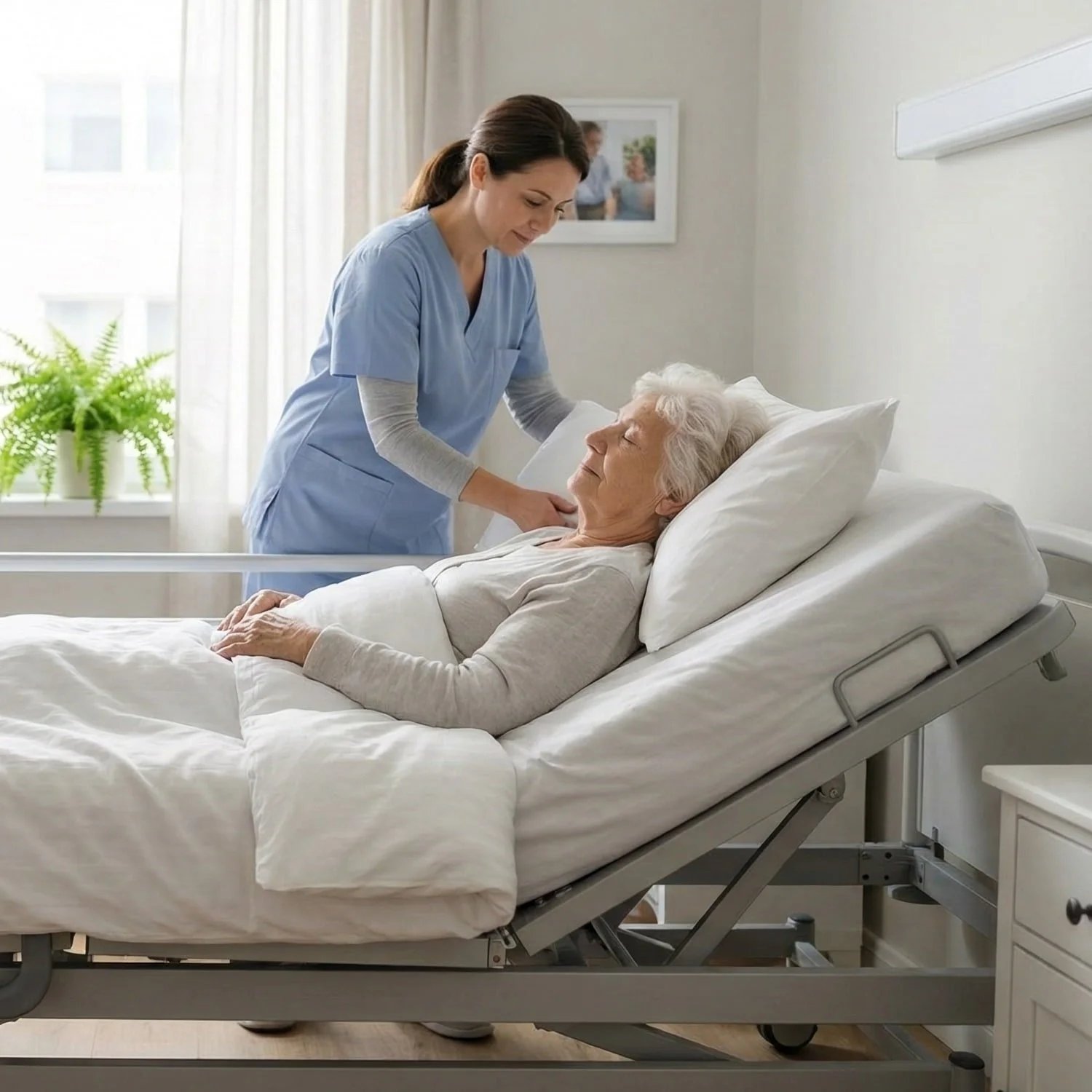
Image generated with AI for illustrative purposes only.
When transitioning a senior into a California Residential Care Facility for the Elderly (RCFE), the LIC 602A form, commonly known as the Physician’s Report, is the most critical document in the process. Within this report, a medical professional must officially certify the potential resident's Bedridden Status. This designation is far more than a simple clinical observation; it is a vital classification that determines the level of care required and whether a specific facility has the legal authority to admit the individual.
This status represents a complex category that defines a person's physical mobility and dictates essential safety protocols during emergencies.
Defining Mobility: Legal and Medical Perspectives
To fully understand what does bed ridden mean within the framework of California law, one must refer to the Health and Safety Code (Section 1569.72).
According to state regulations, this status is assigned to an individual who meets the following criteria:
Requires assistance from others to turn or change body positions while in bed.
Is unable to independently transfer from the bed to a chair or wheelchair and cannot stand without the physical support of staff.
While this description may be used generally in everyday conversation, for a physician it is a precise term medical professionals use to trigger mandatory safety obligations for the licensed facility.
Key Distinctions in Mobility Categories
When clinicians define bed ridden for the purposes of the LIC 602A, they must carefully distinguish it from the "non-ambulatory" category. If an individual cannot walk but is capable of independently transferring into a wheelchair and maneuvering it without help, they are classified as non-ambulatory. "Bedridden" status is reserved exclusively for those who are entirely dependent on caregivers even for movement within the confines of their bed.
Clinical Significance and Health Risks
Specialists at the Mayo Clinic emphasize that a "bedbound" state often leads to significant physiological changes. these include progressive muscle atrophy, an increased risk of cognitive decline, and systemic metabolic disturbances.
For medical record-keeping and care planning, physicians often reference the bed ridden icd 10 code—typically falling under the R26.3 (Immobility) category or more specific codes that identify the underlying cause of the lack of mobility.
Research from the National Institutes of Health (NIH) confirms that prolonged immobility requires a comprehensive medical approach:
Infection Prevention: According to the CDC, residents confined to bed are at a higher risk of developing aspiration pneumonia.
Skin Integrity: A strict repositioning schedule is mandatory to prevent the development of pressure ulcers (bedsores).
Nutritional Monitoring: The Kaiser Permanente Division of Research notes that accurate mobility assessment during the LIC 602A filing process significantly reduces hospital readmission rates by allowing for early dietary and care adjustments.
Facility Licensing and Fire Safety Requirements
For a licensed Assisted Living or Board and Care home, admitting a bed ridden person triggers stringent regulatory requirements from the State of California:
Fire Clearance: The facility must possess a specific fire clearance from the State Fire Marshal. Admitting a bedridden resident without this clearance is a major licensing violation.
Space Organization: Rooms designated for a bedridden resident are often required to be on the ground floor with direct egress to the outdoors or equipped with specialized fire-rated doors.
Staffing Ratios: Caring for such residents requires a higher staff-to-resident ratio to ensure proper hygiene and rapid evacuation during an emergency.
Mobility Level Comparison (Section 17 of Form LIC 602A)
| Category | Status | Description |
| Ambulatory | Yes | Resident can exit the building independently during an alarm. |
| Non-Ambulatory | No | Resident needs assistance to exit but can reposition independently in bed. |
| Bedridden | No | Resident is fully dependent on staff for movement and evacuation and requires State Fire Marshal approval. |
Temporary vs. Permanent Status
On the LIC 602A, the physician must clarify whether the resident's condition is temporary or permanent:
Temporary: Usually associated with recovery from surgery or a short-term illness. A resident may remain in an RCFE with this status for up to 14 days, though extensions are possible with official notification to licensing authorities.
Permanent or Long-term: If the immobility lasts longer than 60 days, the facility must undergo a "retention" review to ensure they can continue to safely house the resident.
Hospice: If the resident is receiving hospice services, mobility requirements may be adjusted under a Hospice Waiver, allowing the patient to remain in a familiar environment despite their physical limitations.
Summary for Families and Administrators
It is essential that the medical professional accurately reflects the patient’s physical abilities in the Physician’s Report. Any inaccuracy in determining mobility can lead to a facility being forced to deny admission on the day of move-in, or the resident facing an emergency transfer to a Skilled Nursing Facility (SNF) if the current home lacks the necessary fire clearance.
References
California Department of Social Services (CDSS) — Health and Safety Code Section 1569.72: Bedridden Persons in RCFE
Mayo Clinic — Bedsores (pressure ulcers): Symptoms and causes of immobility
National Institutes of Health (NIH) / National Institute on Aging — Maintaining Mobility and Preventing Functional Decline in Older Adults
Centers for Disease Control and Prevention (CDC) — Pneumonia and Infection Prevention in Long-term Care Facilities
Kaiser Permanente Division of Research — Impact of Physical Activity and Mobility on Hospitalization Rates in Geriatric Populations
Centers for Medicare & Medicaid Services (CMS) — Definition of Bed-Confined and Requirements for Patient Transport
